
- Home
-
![]()
Formulating for GLP-1 Users: What Ingredients Should Your Oral Care Brand Include To Address Dry Mouth And Acid Erosion?
Views: 0 Author: Site Editor Publish Time: 2026-07-27 Origin: Site
![facebook sharing button]()
![twitter sharing button]()
![line sharing button]()
![wechat sharing button]()
![linkedin sharing button]()
![pinterest sharing button]()
![whatsapp sharing button]()
![kakao sharing button]()
![snapchat sharing button]()
![telegram sharing button]()
![sharethis sharing button]()
Your brand has identified the opportunity. GLP-1 users need dedicated oral care. Now comes the harder question: what exactly goes into the formula? In this post, you'll learn the four evidence-backed ingredients that address the two most damaging GLP-1 oral side effects — xerostomia and enamel erosion — and how to combine them into a product line that performs.
Why Standard Oral Care Formulas Fall Short for GLP-1 Users
Most toothpastes and mouthwashes on the market were designed for a healthy oral environment. They assume adequate salivary flow, a neutral-to-slightly-acidic pH, and an intact enamel surface. GLP-1 users have none of these.
Semaglutide and tirzepatide suppress appetite and slow gastric emptying. The downstream effects on the oral cavity are well-documented: reduced saliva production, repeated acid exposure from nausea and vomiting, and nutritional deficiencies that impair gum tissue repair. A standard fluoride toothpaste applied to an acid-eroded surface immediately after vomiting can actually spread gastric acid across enamel — making the situation worse, not better.
This is why formulating for GLP-1 users requires a different ingredient logic. The formula must address four simultaneous problems: moisture deficit, pH imbalance, enamel demineralization, and microbiome disruption. Each requires a specific active ingredient with a specific mechanism.
The Four Core Ingredients for GLP-1 Oral Care Formulas
1. Hyaluronic Acid (HA): The Moisture Architect
What it does: Hyaluronic Acid is a glycosaminoglycan with an extraordinary capacity to bind and retain water — up to 1,000 times its own weight. In the oral cavity, it forms a sustained hydrating film on mucosal surfaces, compensating for the reduced salivary flow that GLP-1 medications cause.
Why it matters for GLP-1 users: Xerostomia is not just uncomfortable. It is clinically dangerous. Saliva neutralizes acids, remineralizes enamel, and controls bacterial populations. When salivary flow drops, the oral environment becomes hostile to enamel and favorable to pathogens. HA does not replace saliva — nothing does — but it provides the mucosal hydration that reduces the mechanical discomfort of dry mouth and creates a protective barrier on exposed tissue.
Formulation guidance: - Effective concentration range: 0.1–0.2% in oral sprays and serums; 0.05–0.1% in mouthwash - Molecular weight matters: Low-molecular-weight HA (< 50 kDa) penetrates gum tissue for deeper hydration; high-molecular-weight HA (> 1,000 kDa) forms a surface film for immediate relief - Optimal combination: A blend of both molecular weights provides both immediate and sustained hydration - Stability note: HA is sensitive to extreme pH; formulate at pH 6.5–7.5 for maximum stability
Best product format: Dry mouth spray (30ml pocket format) or overnight gum serum
Internal link: Private Label Dry Mouth Spray
2. L-Arginine: The pH Buffer and Prebiotic Shield
What it does: L-Arginine is an amino acid that serves a dual function in oral care. First, it acts as a direct pH buffer — its alkaline nature (pKa 10.76) neutralizes acids in the oral environment. Second, it functions as a prebiotic substrate for beneficial arginolytic bacteria, particularly Streptococcus sanguinis, which metabolize Arginine via the Arginine Deiminase System (ADS) to produce ammonia, further elevating plaque pH.
Why it matters for GLP-1 users: The acid erosion problem in GLP-1 users has two sources: exogenous acid from gastric reflux/vomiting, and endogenous acid from the shift in oral microbiome toward acid-producing Streptococcus mutans that thrives in the low-saliva, low-pH environment. L-Arginine addresses both simultaneously — it buffers the immediate acid insult and restores the ecological conditions that favor beneficial bacteria over pathogenic ones.
Formulation guidance: - Clinically validated concentration: 1.5% in toothpaste (this is the concentration used in Colgate's Pro-Relief and Evenmouth's DuoBiotic formula) - In alkaline mouthwash: 0.5–1.0% combined with Sodium Bicarbonate (1.5–2%) - Compatibility note: L-Arginine is compatible with Fluoride and nHAp; it enhances Fluoride's remineralization efficacy by maintaining the elevated pH that Fluoride requires to deposit hydroxyapatite - Avoid combining with SLS (Sodium Lauryl Sulfate): SLS disrupts the mucosal barrier that Arginine's prebiotic action depends on
Best product format: pH-rescue alkaline mouthwash or remineralizing toothpaste tablets
3. Nano-Hydroxyapatite (nHAp): The Enamel Rebuilder
What it does: Nano-Hydroxyapatite is a synthetic form of the mineral that constitutes 97% of tooth enamel. At nano-scale particle sizes (20–100nm), it integrates directly into enamel crystalline structure, filling microscopic lesions created by acid erosion and providing biomimetic remineralization that is structurally identical to natural enamel repair.
Why it matters for GLP-1 users: Acid erosion from repeated gastric acid exposure is irreversible once enamel is lost. However, in the early stages — when enamel is demineralized but not yet physically removed — nHAp can restore mineral density and rebuild the surface layer. For GLP-1 users who experience regular acid exposure, a daily nHAp formula creates a continuous remineralization cycle that counteracts ongoing demineralization.
The nHAp vs. Fluoride question: Both remineralize enamel, but through different mechanisms. Fluoride converts hydroxyapatite to fluorapatite, which is harder but more brittle. nHAp deposits hydroxyapatite directly, maintaining enamel's natural flexibility and biocompatibility. For GLP-1 users with severely compromised enamel, a combination of nHAp (10%) and low-dose Fluoride (1,000–1,450ppm) provides both structural restoration and acid resistance.
Formulation guidance: - Effective concentration: 10% nHAp in toothpaste tablets or paste - Particle size: 20–80nm for optimal enamel integration - Critical formulation rule: Never use SLS with nHAp. SLS denatures the protein pellicle on enamel surfaces that nHAp uses as an attachment scaffold. SLS-free formulas are non-negotiable for GLP-1 oral care products. - pH sensitivity: nHAp is most effective at pH 6.5–7.5; formulate accordingly - Abrasivity: nHAp has an RDA (Relative Dentin Abrasivity) of < 50, making it safe for acid-compromised enamel
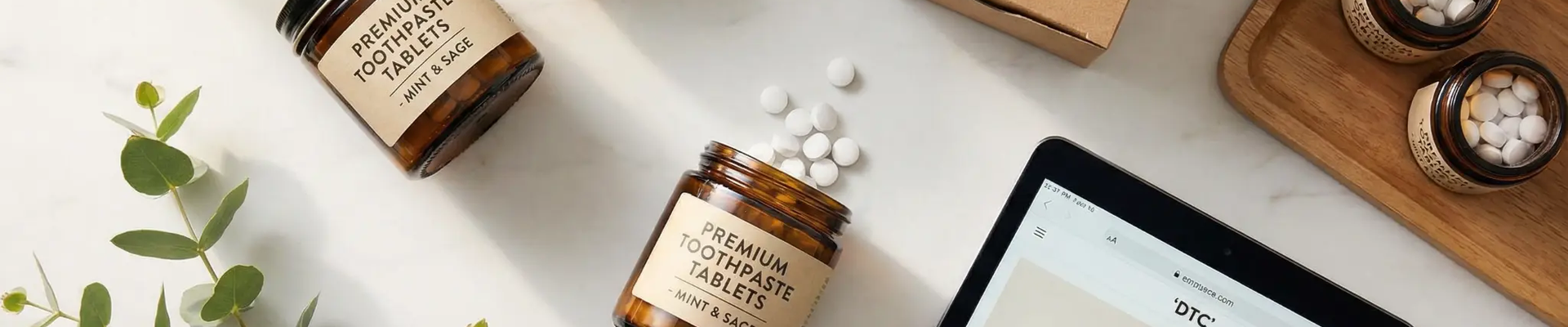
Best product format: Remineralizing toothpaste tablets (SLS-free, glass jar or aluminum tin)
Internal link: Private Label Toothpaste Tablets
4. Oral Probiotics (Lactobacillus strains): The Microbiome Restorer
What it does: Oral probiotics — specifically Lactobacillus reuteri (DSM 17938 and ATCC PTA 5289 strains) and Lactobacillus salivarius — colonize the oral mucosa and competitively exclude pathogenic bacteria. They produce bacteriocins (natural antimicrobial peptides) that suppress Streptococcus mutans and Porphyromonas gingivalis, the primary drivers of caries and periodontal disease respectively.
Why it matters for GLP-1 users: The GLP-1 oral environment — low saliva, low pH, nutritional deficiency — creates ideal conditions for pathogenic bacterial overgrowth. Standard antiseptic mouthwashes (containing chlorhexidine or cetylpyridinium chloride) kill all bacteria indiscriminately, further destabilizing an already compromised microbiome. Probiotic oral care takes the opposite approach: it rebuilds the beneficial bacterial population that GLP-1 medications have disrupted.
Formulation guidance: - Viable CFU count: Minimum 1 billion CFU per dose for clinical efficacy - Strain selection: L. reuteri DSM 17938 has the strongest clinical evidence for gum health; L. salivarius K12 has evidence for halitosis reduction - Format challenge: Live probiotics are incompatible with most liquid oral care formats due to moisture and pH sensitivity - Optimal formats: Chewable tablets, dissolvable lozenges, or lyophilized (freeze-dried) powder in capsule form - Stability requirement: Probiotics require cold-chain storage or microencapsulation for shelf stability at room temperature; microencapsulation (lipid or alginate coating) extends shelf life to 18–24 months at ambient temperature - Synbiotic opportunity: Combining probiotics with L-Arginine (prebiotic) in the same formula creates a "synbiotic" effect — the Arginine feeds the beneficial bacteria that the probiotics introduce
Best product format: Chewable probiotic tablet or dissolvable lozenge (separate SKU or as a complement to the mouthwash/toothpaste line)
![The GLP-1 Oral Care Formula 4 Ingredients 4 Mechanisms.png]()
The Combination Formula Logic: Why These Four Work Together
These four ingredients are not simply additive — they are synergistic. Understanding their interaction is what separates a thoughtfully engineered GLP-1 oral care formula from a random collection of trendy actives.
Ingredient
Primary Mechanism
Secondary Benefit
Works With
Hyaluronic Acid
Mucosal hydration
Gum tissue repair
Probiotics (HA supports mucosal colonization)
L-Arginine
pH buffering
Prebiotic microbiome support
nHAp (Arginine elevates pH for optimal nHAp deposition)
Nano-HAp
Enamel remineralization
Dentinal tubule occlusion (sensitivity)
Fluoride (complementary remineralization)
Oral Probiotics
Microbiome restoration
Halitosis reduction
L-Arginine (synbiotic combination)
The clinical logic of the combination is as follows. Hyaluronic Acid addresses the immediate moisture deficit and creates a hospitable mucosal environment. L-Arginine corrects the pH imbalance that drives both acid erosion and pathogenic bacterial overgrowth. Nano-HAp repairs the structural enamel damage that has already occurred. Oral probiotics restore the microbial ecology that GLP-1 medications have disrupted. Each ingredient addresses a different layer of the problem; together, they address the complete pathological picture.
What to Avoid: Ingredients That Make GLP-1 Oral Problems Worse
Formulating for GLP-1 users is as much about exclusion as inclusion. Several common oral care ingredients actively worsen the conditions that GLP-1 medications create.
Sodium Lauryl Sulfate (SLS): The most common foaming agent in toothpaste. SLS disrupts the oral mucosal barrier, worsens dry mouth symptoms, and denatures the protein pellicle that nHAp requires for enamel attachment. All GLP-1 oral care products should be SLS-free.
Alcohol-based mouthwashes: Alcohol is a desiccant. In a patient already experiencing xerostomia, an alcohol-based rinse dramatically worsens dry mouth and increases the risk of mucosal irritation. Use Xylitol or Betaine as humectant alternatives.
High-abrasivity whitening agents: Silica-based whitening agents with RDA values above 100 are contraindicated for acid-eroded enamel. The enamel surface is already compromised; abrasive polishing accelerates irreversible mineral loss.
Chlorhexidine (for daily use): While effective as a short-term antimicrobial, daily chlorhexidine use eliminates beneficial bacteria alongside pathogens, worsening the microbiome disruption that GLP-1 medications cause. Reserve for acute infection management, not daily maintenance.
How Qiaoerna Formulates for GLP-1 Oral Care
At Qiaoerna, we have developed formulation capabilities specifically for the emerging GLP-1 oral care category. Our R&D team works with all four of the core actives described in this article — including microencapsulated probiotic strains for ambient-temperature stability, pharmaceutical-grade nHAp at 20–80nm particle size, and dual-molecular-weight Hyaluronic Acid blends.
We provide complete documentation packages for every formula: Safety Data Sheets (SDS), Certificates of Analysis (COA), INCI ingredient lists, and stability testing data. For brands entering the GLP-1 oral care category, we also offer formulation consultation to help you select the right active combination for your target SKU.
If you are ready to develop your GLP-1 oral care private label line, contact our team at qiaoernatooth.com.
Frequently Asked Questions
Can I use all four ingredients in a single product?
Not optimally. Probiotics are incompatible with liquid formats and require separate delivery (chewable tablet or lozenge). The other three — HA, L-Arginine, and nHAp — can be combined in a toothpaste tablet or gel formula. The most effective approach is a two-product system: a remineralizing toothpaste tablet (nHAp + L-Arginine + HA) paired with a probiotic chewable.What is the minimum order quantity for a GLP-1 oral care formula?
Contact our team at Qiaoerna to discuss your specific requirements. We offer flexible MOQ structures for new category launches.Is nHAp approved for use in oral care products in the US and EU?
Yes. nHAp is approved as a cosmetic ingredient in both the US (under FDA cosmetic regulations) and the EU (under EU Cosmetics Regulation 1223/2009). It is classified as a cosmetic active, not a drug, when used at concentrations below 30%.How do I position a GLP-1 oral care product without making drug claims?
Focus on cosmetic claims: "supports oral hydration," "helps restore enamel mineral density," "supports a balanced oral microbiome." Avoid disease claims such as "treats dry mouth" or "prevents tooth decay," which require drug registration. Our regulatory team can advise on compliant claim language for your target market.Conclusion
Formulating for GLP-1 users is not complicated — but it requires precision. The four ingredients outlined here — Hyaluronic Acid, L-Arginine, Nano-Hydroxyapatite, and oral probiotics — address the complete pathological picture of GLP-1 oral side effects. The formulation logic is clear. The market is waiting. The brands that get the formula right first will own this category.
This article is the second in Qiaoerna's GLP-1 Oral Care Series. Read the first article: Ozempic Mouth Is Real: How GLP-1 Medications Are Creating a New Private Label Oral Care Category.
![Customized Dry Mouth Spray]()
![Customized Probiotic Oral Spray]()
![Customized Microbiome Balancing Mouth Spray]()
![Sleep Deep Mouth Spray for Nighttime]()
![Coconut Probiotic Oral Spray – Alcohol-Free Fresh Breath Care]()


