
- Home
-
![]()

Why Toothpaste Tablets Are Becoming Popular In Hotels, Travel And Retail Markets
Views: 0 Author: Site Editor Publish Time: 2026-06-13 Origin: Site
![facebook sharing button]()
![twitter sharing button]()
![line sharing button]()
![wechat sharing button]()
![linkedin sharing button]()
![pinterest sharing button]()
![whatsapp sharing button]()
![kakao sharing button]()
![snapchat sharing button]()
![telegram sharing button]()
![sharethis sharing button]()
The commercial oral care landscape is undergoing a structural shift away from traditional water-based pastes toward unit-dose, solid formats. Driven by strict plastic bans, corporate ESG (Environmental, Social, and Governance) targets, and changing consumer travel habits, Toothpaste Tablets have transitioned from niche eco-products to highly scalable commercial solutions.
This structural shift solves multiple operational hurdles at once. Hospitality providers can eliminate the messy waste of half-empty amenities. Travelers bypass frustrating liquid restrictions entirely. Retailers enjoy lighter freight and unique subscription opportunities. Traditional mini tubes generate massive waste and consistently frustrate modern travelers.
This guide breaks down the operational advantages, clinical realities, and procurement considerations driving the adoption of solid oral care across hospitality, travel, and retail sectors. We will explore how these compact solutions revolutionize daily hygiene. You will learn the exact material science making these formats viable and how to implement them successfully.
Key Takeaways
Hospitality & Travel Efficiency: Eliminates the waste of partially used mini toothpaste tubes, resolves TSA liquid constraints, and significantly reduces payload weight for airlines and outdoor travelers.
Clinical Parity: Formulations utilizing 5% nano-hydroxyapatite (nHAp) demonstrate remineralization efficacy comparable to standard 1100 ppm fluoride pastes, satisfying clinical standards without the need for traditional liquid preservatives.
Supply Chain Economics: Waterless formats (removing the typical 50% water content in paste) reduce freight weight, lowering carbon footprints and supporting corporate net-zero targets.
Implementation Realities: Consumer adoption requires overcoming a sensory learning curve (initial chalky texture), and products must strictly adhere to FDA and EU cosmetic or therapeutic regulations.
The Business Case: Why Hospitality and Travel Brands Are Phasing Out Mini Tubes
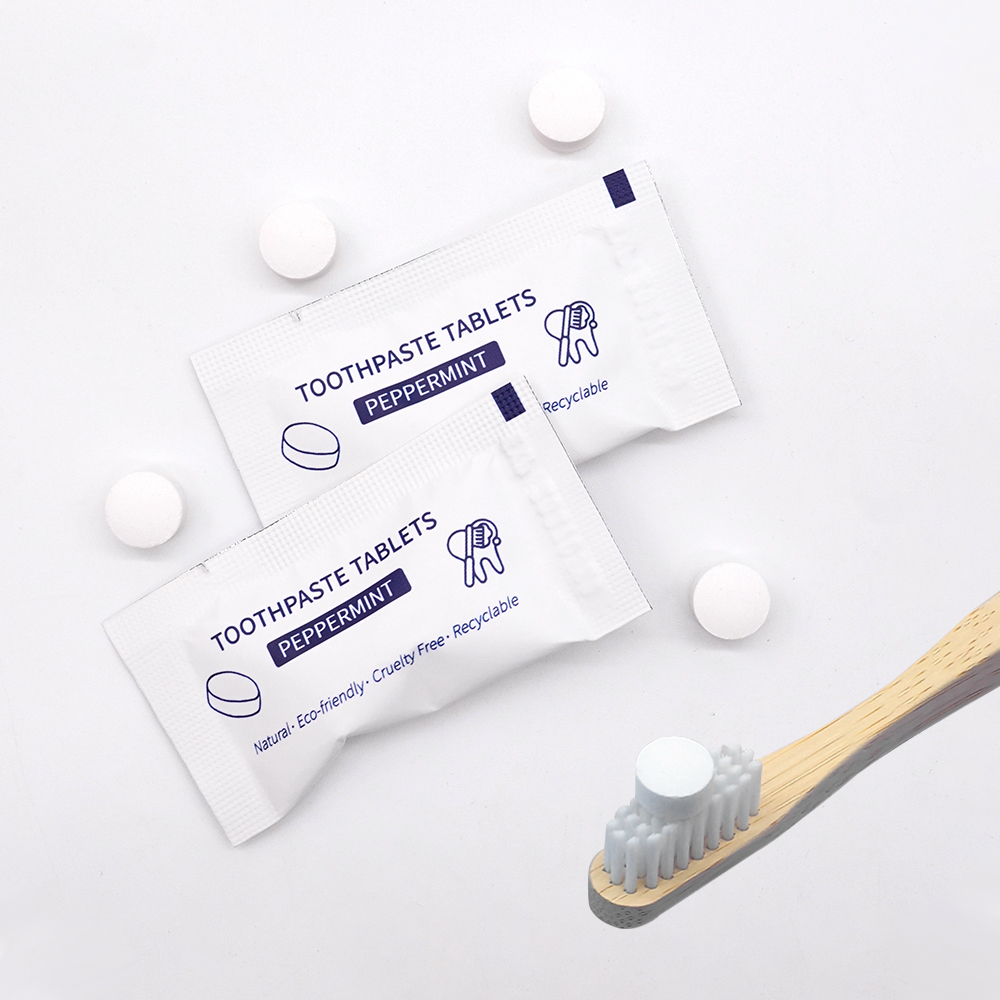
The hospitality sector faces increasing pressure to minimize single-use plastics. Traditional hotel amenities generate massive landfill waste globally. The United States alone discards an estimated 400 million toothpaste tubes annually. Switching to a solid dose provides a zero-waste, exact-dose alternative. It directly prevents guests from discarding half-full miniature tubes after a brief weekend stay. Sourcing reliable Hotel Toothpaste Tablets helps property managers achieve sustainability benchmarks effortlessly.
Aviation and TSA Compliance
Air travel introduces strict regulatory hurdles for liquids. Solid formats bypass all TSA liquid restrictions seamlessly. Fliers pack them directly into carry-on bags. Furthermore, airlines and long-haul travel operators benefit immensely. Transitioning to lightweight, dehydrated formats reduces onboard amenity payload weight. This weight reduction supports broader aviation fuel-saving initiatives.
Extreme Travel & Outdoor Retail
Outdoor enthusiasts demand extreme efficiency from their gear. Mountaineers, backpackers, and campers leverage solid doses for strict weight management. Traditional tube packaging often bursts at high altitudes. Solid formats prevent messy cabin-pressure leaks entirely.
Here are the common operational advantages for travel brands:
Eliminated leakage: Dry formats cannot spill in luggage.
Precise inventory management: Hospitality staff track individual doses easily.
Extended shelf life: Removing water prevents premature bacterial growth.
Emergency and "Dry" Brushing
Modern travel requires rapid refreshment options. Solid doses allow for fast, brush-free oral refreshment. Users simply chew the tablet, swish vigorously with water, and spit. This proves invaluable in transit hubs, airport lounges, or between tight business meetings. It bridges the gap between chewing gum and full dental hygiene.
Retail Category Growth: Subscription Models and Consumer D2C Demand
The consumer retail market shows tremendous appetite for solid oral care. Buyers increasingly seek hygienic, sanitary alternatives to traditional tubes. Shared households frequently struggle with cross-contamination. Multiple family members touch the same tube opening daily. Unit-dose formats solve this core consumer pain point immediately. They eliminate the shared application point entirely. Every user receives a precise, sanitary dose every single time.
The Subscription Economy Lock-in
Retailers and direct-to-consumer (D2C) brands capitalize on lightweight packaging. Flat-pack designs easily fit through standard mail slots. Brands successfully utilize this lightweight nature to drive high-margin subscription models. Low shipping costs make recurring deliveries highly profitable. This model significantly improves customer lifetime value (LTV).
Chart: Subscription vs. Retail Shelf Performance Drivers
Retail Channel
Primary Growth Driver
Logistical Advantage
D2C Subscription
Automated replenishment lock-in
Fits standard postal dimensions
Supermarket Shelf
Eco-conscious impulse buys
High unit density per shelf inch
Outdoor / Travel Retail
TSA compliance and portability
Zero freeze/thaw degradation
Clean Label Preferences
Modern shoppers heavily scrutinize ingredient lists. Traditional pastes rely on water, requiring robust chemical preservatives to prevent mold. By eliminating the water content, manufacturers omit controversial artificial preservatives. Formulators also drop harsh foaming agents like Sodium Lauryl Sulfate (SLS). Dental professionals commonly link SLS to mucosal irritation and canker sores. Removing these chemicals caters perfectly to the rising "clean label" consumer demographic.
![Toothpaste Tablets Application]()
Clinical Efficacy: Formulations, Fluoride, and Nano-Hydroxyapatite
Skeptics often question the clinical validity of solid oral care. However, advanced formulations match traditional pastes point-for-point. The industry heavily debates the inclusion of fluoride versus alternative minerals.
The Fluoride vs. nHAp Evaluation
Fluoride remains the universally recognized standard for cavity prevention. Dental boards universally endorse it for enamel protection. However, clinical data heavily supports 5% nano-hydroxyapatite (nHAp) as a scientifically sound alternative. It provides non-toxic remineralization matching standard 1100 ppm fluoride pastes. This biomimetic mineral appeals strongly to fluoride-hesitant consumer segments. Major brands now offer both variations to capture the entire market.
Best Practice: Always verify clinical lab data before procuring nHAp formats. The concentration must reach at least 5% to ensure adequate remineralization.
Material Science and Compression Ratios
Manufacturing a viable solid dose requires strict compression parameters. Material science plays a pivotal role here. If machines compress the powder too loosely, high friability occurs. The units crumble into useless powder during shipping. Conversely, if compressed too densely, they fail to hydrate. Dense units will not foam properly in the mouth. Achieving the perfect compression ratio separates premium products from inferior ones.
pH Balance and Desensitization
Basic hygiene is no longer sufficient for premium buyers. Advanced formulations now integrate potassium nitrate. This active ingredient effectively soothes sensitive nerve endings. Some formulators even introduce targeted oral probiotics. These probiotics support healthy oral microbiomes. These clinical upgrades move the category from basic travel hygiene into functional, daily therapeutics.
ESG Impact and Supply Chain Economics
Corporate sustainability mandates force procurement teams to rethink daily operations. Traditional liquid pastes carry hidden environmental burdens. Approximately 50% of a standard tube consists merely of water. Shipping water across the globe burns unnecessary fossil fuels.
Decarbonizing Logistics
Removing water translates directly into smaller packaging volumes. It significantly lightens shipping weights across the entire distribution network. Global distributors leverage this weight reduction to lower Scope 3 carbon emissions. Lighter freight requires less fuel per pallet. This simple material shift supports corporate net-zero targets efficiently.
Sustainable Packaging Transitions
The packaging itself presents another massive ESG upgrade. Multi-layer laminated plastic tubes are notoriously difficult to recycle. Municipal facilities usually reject them. In contrast, solid doses are natively compatible with alternative materials. Brands package them in infinitely recyclable glass jars. They also utilize lightweight aluminum tins. Many opt for industrially compostable refill pouches. These options keep plastic out of landfills entirely.
Table: Environmental Impact Comparison
Metric
Traditional Paste Tubes
Solid Dehydrated Formats
Water Content
Approx. 50%
0%
Packaging Recyclability
Very Low (Multi-layer plastic)
Very High (Glass, Aluminum, Paper)
Product Waste
High (10-15% left in tube)
Zero (Exact unit dosing)
Freight Efficiency
Low (Heavy, bulky)
High (Lightweight, dense)
Implementation Risks and Buyer Considerations
Transitioning a customer base or a hotel property to solid doses involves specific challenges. Procurement teams must navigate sensory, physical, and regulatory landscapes carefully. Partnering with a reputable Custom Toothpaste Tablets OEM/ODM can mitigate many formulation risks.
The Sensory Adjustment Curve
First-time users often experience an adjustment period. They report an initial "chalky" or "sour powder" mouthfeel. This sensation lasts only until saliva activates the ingredients. Hospitality and retail brands must invest heavily in user education. Clear usage instructions prevent user frustration.
We recommend displaying these specific steps clearly on the packaging:
Chew: Crush the unit completely between the molars.
Wet Brush: Hydrate the toothbrush bristles thoroughly.
Brush: Brush normally to activate the gentle foaming action.
Common Mistake: Failing to instruct users to wet their brush results in zero foam and negative product reviews.
Physical Limitations
Solid doses are not universally suitable for every demographic. Dental professionals advise against them for certain individuals. People with missing teeth struggle to crush them adequately. Individuals with severe bite misalignments or jaw mobility issues face similar challenges. Care facilities and inclusive hotels must provide traditional alternatives upon request.
Regulatory Compliance
Navigating global dental regulations requires strict diligence. Procurement teams must verify all safety mandates. Imported or newly sourced goods must meet stringent FDA (US) and EU Commission regulations. Regulators strictly monitor efficacy claims. They also evaluate acceptable abrasive levels (RDA) and manufacturing consistency. Ensure your supplier maintains up-to-date cosmetic or therapeutic certifications.
Offline Availability Gaps
Online D2C models currently dominate the landscape. However, physical retail spaces exhibit obvious availability gaps. Category managers have a massive opportunity to capture foot traffic. They must stock clinically validated, fluoride-included options on physical supermarket shelves. Currently, these items suffer from low visibility offline. Early adopters in retail management will capture a loyal, eco-conscious local demographic.
Conclusion
The transition to solid oral care formats is not merely a sustainable marketing trend. It represents a vital evolution in unit-dose material science. This shift solves tangible logistical, hygienic, and environmental problems simultaneously. Brands eliminate the massive waste generated by half-empty mini tubes. Supply chains benefit from lighter, waterless freight.
For hotel procurement officers and retail category managers, the decision to stock these formats requires careful strategy. You must balance clinical efficacy against proper user education. Ensuring the inclusion of fluoride or premium nHAp guarantees dental board approval. Meanwhile, clear instructions ease the sensory transition for first-time users.
Brands successfully sourcing well-formulated, properly compressed products stand to gain immensely. You will capture a rapidly expanding demographic of eco-conscious, travel-ready consumers. Embrace this shift to modernize your amenities, lower your shipping emissions, and provide superior hygienic solutions.
FAQ
Q: Do toothpaste tablets contain fluoride?
A: Many initial market offerings were fluoride-free, but major brands now offer both fluoride and nano-hydroxyapatite variations to meet clinical dental standards for enamel protection.
Q: Are toothpaste tablets allowed on airplanes?
A: Yes. Because they contain zero water, they are entirely exempt from TSA liquid limits, making them the preferred choice for carry-on travel.
Q: Can children use toothpaste tablets?
A: While generally safe, tablets pose a potential choking hazard for toddlers. They are typically recommended for older children who can consistently follow instructions to chew thoroughly before brushing.
Q: Do toothpaste tablets foam like regular toothpaste?
A: They foam differently. Because most tablets omit harsh chemical surfactants like SLS, the lather is often softer and less voluminous, relying on saliva and a wet toothbrush for activation.
![Cinnamon Dual-Color Toothpaste Tablets – Gentle Enamel Repair & Comfort Care]()
![Nicotinamide Toothpaste Tablets]()
![Herbal Agave Brightening Toothpaste Tablets]()
![Pink & White Color-Dual Toothpaste Tablets Sensitive Repair]()
![Citrus Dual-Color Toothpaste Tablets – Daily Freshness & Oral Balance Care]()
![Green & White Color-Dual Toothpaste Tablets Purifying & Gum Soothing Care]()
![Hydroxyapatite Printed Animal Character Toothpaste Tablets for Kids]()
![Social Sparkle On-The-Go Whitening Pearls Toothpaste Tablets]()
![Prebiotic Toothpaste Tablets for Oral Microbiome Balance]()
![BioGuardian Probiotic Toothpaste Tablets with Prebiotic Formula]()
![Engineered OEM Toothpaste Tablets – Pharmaceutical-Grade Formula for Private Label Oral Care Brands]()
![Plastic-Free and Sustainable Enamel Repair Toothpaste Tablets]()
![Natural Sleep & Whitening Toothpaste Tablets – Overnight Teeth Stain Removal]()
![Rapid Relief Sensitive Care Toothpaste Tablets]()
![SensiCare Nano-Repair Toothpaste Tablets for Sensitive Teeth]()
![Anhydrous Prebiotic Toothpaste Tablets (Inulin & FOS Bio-Delivery System) 2026]()
![Test]()
![Nocturnal Source Tart Cherry Sleep Toothpaste Tablets]()
![Daily-Use & Stability-Optimized Engineered Toothpaste Tablets]()
![Tart Cherry Sleep Toothpaste Tablets]()