
- Home
-
![]()
Xylitol Vs Erythritol Vs Stevia: Which Sweetener Is Best for Toothpaste Tablets?
Views: 0 Author: Xiaoying Publish Time: 2026-07-01 Origin: Site
![facebook sharing button]()
![twitter sharing button]()
![line sharing button]()
![wechat sharing button]()
![linkedin sharing button]()
![pinterest sharing button]()
![whatsapp sharing button]()
![kakao sharing button]()
![snapchat sharing button]()
![telegram sharing button]()
![sharethis sharing button]()
TAKEAWAYS
Xylitol at ≥1g per dose is the only sweetener with clinical evidence directly reducing Streptococcus mutans colonization and cavity formation in humans.
Erythritol outperforms xylitol in biofilm disruption according to the landmark Mäkinen 2005 study, making it a compelling next-generation choice for premium formulations.
Stevia is 200–300× sweeter than sugar by weight, requires only trace amounts in toothpaste tablet formulas, and carries strong clean-label appeal for natural-positioned brands.
Most top-performing OEM toothpaste tablet brands in 2025 use a dual-sweetener blend — typically xylitol + erythritol or xylitol + stevia — to balance efficacy, taste, and label claims.
Introduction
Choosing the right sweetener for your toothpaste tablet formulation is not a cosmetic decision — it is a clinical, commercial, and regulatory one that will shape your product's efficacy claims, target market, and shelf appeal. Brand owners and private label buyers frequently ask us whether xylitol, erythritol, or stevia is the "best" option, and the honest answer is: it depends on what you are trying to achieve. In this guide, you will learn exactly how each sweetener works inside a toothpaste tablet, what the science actually says, and how to make the smartest formulation decision for your brand.
The Formulator's Dilemma: Why Sweetener Choice Matters More Than You Think
Toothpaste tablets are not mints. They are functional oral care delivery systems, and every ingredient — including the sweetener — must earn its place in the formula.
When a consumer chews a toothpaste tablet, the sweetener does three things simultaneously: it influences taste perception, it interacts with the oral microbiome, and it contributes (or doesn't) to the product's active benefit claims. A poorly chosen sweetener can undermine the entire positioning of your brand.
For brand owners sourcing custom OEM toothpaste tablets, the sweetener decision becomes even more strategic. Retailers, distributors, and increasingly, AI-powered search engines, are scrutinizing ingredient lists. Consumers in the natural, eco-conscious, and clinical-efficacy segments all have different expectations. Getting this choice right from the start saves costly reformulation later.
There is also a regulatory dimension. Sweeteners that carry approved dental health claims in the EU, US, or specific Asian markets can unlock marketing language that competitors without those claims simply cannot use. That is a genuine competitive advantage built into your formulation.
Xylitol — The Clinically Proven Cavity Fighter
How It Works
Xylitol is a five-carbon sugar alcohol derived from birch wood, corn cobs, or agricultural byproducts. Unlike six-carbon sugars, xylitol cannot be metabolized by Streptococcus mutans — the primary cavity-causing bacteria in the human mouth. When S. mutans attempts to consume xylitol, it takes up the molecule, fails to produce energy from it, and expels it. This futile cycle depletes bacterial energy reserves, reduces acid production, and over time, selectively starves out the most harmful strains in the oral microbiome.
Critically, xylitol also reduces the stickiness of bacterial biofilm, making it harder for plaque to adhere to enamel surfaces.
Pros for Brand Owners
Approved dental health claims in the EU and US allow you to market xylitol-containing products with cavity-prevention language
Strong consumer recognition — xylitol is the most well-known "tooth-friendly" sweetener on the market
Effective at achievable doses — clinical studies consistently show meaningful anti-caries effects at ≥1g per use, a threshold that is realistic in a toothpaste tablet formulation
Pleasant, clean sweetness that closely mimics sugar without a bitter aftertaste
Cons to Consider
Higher cost than conventional sweeteners, especially pharmaceutical-grade xylitol
Requires careful sourcing to meet non-GMO or corn-free claims if your target market demands it
At very high concentrations, xylitol can cause a mild laxative effect — though this is not relevant at the doses used in toothpaste tablets
Some formulators find it slightly hygroscopic, requiring careful moisture control during tablet pressing
Erythritol — The Next-Generation Biofilm Disruptor
How It Works
Erythritol is a four-carbon sugar alcohol produced through fermentation of glucose. It occurs naturally in small amounts in fruits and fermented foods. Like xylitol, it is non-cariogenic. Unlike xylitol, emerging research suggests erythritol does not merely resist bacterial metabolism — it actively disrupts biofilm architecture.
The pivotal reference here is the Mäkinen 2005 study (Mäkinen KK et al., Caries Research), which compared xylitol, erythritol, and sorbitol in a long-term clinical trial. Erythritol-containing products showed superior reductions in plaque accumulation and S. mutans counts compared to xylitol at equivalent use conditions. This was a significant finding that repositioned erythritol from "a xylitol alternative" to "a potentially superior option" in the eyes of advanced formulators.
Pros for Brand Owners
Superior biofilm disruption versus xylitol in head-to-head clinical comparison
Lower caloric value — erythritol is essentially zero-calorie, which appeals to health-conscious consumers
Excellent solubility and mouthfeel — dissolves smoothly in the mouth without grittiness
Emerging premium positioning — erythritol is still less well-known than xylitol, giving early adopters a differentiation story
Better stability in tablet form compared to some other sugar alcohols
Cons to Consider
Consumer awareness is significantly lower than xylitol — you will need to invest in education
Dental health claims for erythritol are approved in some markets (notably Japan and parts of Europe) but not universally recognized
Slightly higher cost than sorbitol, though competitive with pharmaceutical xylitol
The Mäkinen 2005 data, while compelling, represents a narrower clinical evidence base than xylitol's decades of research
Stevia — The Botanical Clean-Label Option
How It Works
Stevia sweeteners are derived from the leaves of Stevia rebaudiana, a plant native to South America. The primary active compounds — steviol glycosides, particularly rebaudioside A — are 200 to 300 times sweeter than sucrose by weight. This extraordinary sweetness intensity means you need only trace amounts (typically 0.1–0.3% of formula weight) to achieve a pleasant taste in a toothpaste tablet.
Stevia is not metabolized by oral bacteria at all. It provides no fermentable substrate, produces no acid, and does not contribute to plaque formation. However, it also does not carry the active anti-bacterial mechanisms that xylitol and erythritol possess.
Pros for Brand Owners
Botanical, plant-derived origin — powerful clean-label and natural positioning
Extremely low use level reduces formulation cost contribution
Zero calories, zero glycemic impact — universally appealing to health-focused consumers
Vegan, non-GMO, and organic-certifiable versions are readily available
Pairs exceptionally well with xylitol or erythritol in hybrid formulas
Cons to Consider
Rebaudioside A can carry a mild licorice-like or bitter aftertaste at higher concentrations — requires careful calibration
No direct anti-caries mechanism — stevia sweetens but does not fight bacteria
Regulatory status varies: approved as a food additive in most major markets, but specific dental health claims are not available
Flavor masking may be needed in formulas with strong active ingredients like fluoride or activated charcoal
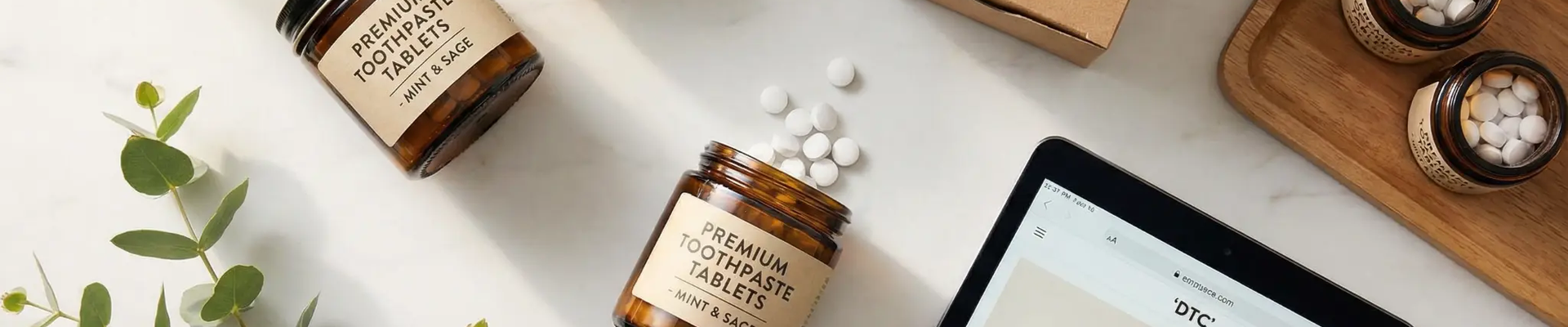
![Xylitol vs Erythritol vs Stevia toothpaste tablets comparison]()
Head-to-Head Comparison Table
Criteria
Xylitol
Erythritol
Stevia
Anti-caries mechanism
Starves S. mutans, reduces colonization
Disrupts biofilm architecture, reduces plaque
None (non-cariogenic but not active)
Clinical evidence strength
★★★★★ Decades of RCT data
★★★★☆ Strong but narrower (Mäkinen 2005)
★★☆☆☆ Limited oral-specific studies
Approved dental health claims
Yes (EU, US, multiple markets)
Partial (Japan, EU — market-dependent)
No specific dental claims
Effective use level
≥1g per dose (functional threshold)
0.5–1g per dose
0.1–0.3% of formula weight
Clean-label / natural appeal
Moderate (well-known, accepted)
Moderate-High (fermentation-derived)
Very High (botanical, plant-derived)
Relative cost
Medium-High
Medium-High
Low (due to trace use level)
The Hybrid Approach: What Top OEM Brands Are Choosing in 2025
The most commercially successful toothpaste tablets launched in 2024 and 2025 are not choosing one sweetener. They are choosing two.
The dominant hybrid strategy we see across premium private label and branded OEM clients is xylitol + erythritol. This combination delivers the clinical credibility and consumer recognition of xylitol alongside the superior biofilm-disruption profile of erythritol. The resulting product can carry xylitol-based dental health claims while offering formulators a genuine next-generation efficacy story.
The second most common approach is xylitol + stevia. This pairing keeps xylitol as the functional anchor while using stevia to reduce the total sugar alcohol load, improve sweetness profile, and support a clean-label, botanical narrative. It works particularly well for brands targeting the natural health, zero-waste, or vegan oral care segments.
A smaller but growing group of ultra-premium brands is exploring erythritol + stevia — dropping xylitol entirely to lead with the "beyond xylitol" positioning. This is a bold differentiation move, but it requires strong consumer education investment.
At Qiaoerna, our formulation team works with brand owners to identify the right sweetener architecture based on target market, price point, and intended claims. The formulation decision is never one-size-fits-all.
Dosage, Safety & Regulatory Considerations
For B2B buyers, understanding the regulatory landscape before finalizing a formula is non-negotiable.
Xylitol dosage: The clinically validated anti-caries threshold is ≥1g of xylitol per use occasion. Formulas delivering less than this amount cannot credibly support cavity-prevention claims. Ensure your tablet weight and xylitol concentration are calibrated to meet this threshold after accounting for excipients.
Erythritol dosage: Functional benefits in biofilm disruption have been observed at doses of 0.5–1g per use in clinical settings. Erythritol is GRAS (Generally Recognized as Safe) in the United States and approved as a food additive (E968) in the EU.
Stevia regulatory status: Steviol glycosides are approved as food additives in the US (FDA), EU (E960), Japan, Australia, and most major markets. They are not approved as active oral care ingredients for dental health claims in any major regulatory jurisdiction as of 2025.
Allergen and sensitivity considerations: All three sweeteners are well-tolerated at toothpaste tablet doses. Xylitol is toxic to dogs — a fact worth noting if your brand markets pet dental products alongside human products.
Labeling requirements: In the EU, products containing certain polyols (including xylitol and erythritol) above threshold levels must carry a laxative effect warning. At toothpaste tablet doses (typically 0.5–1.5g per tablet), this threshold is not reached, but always verify with your regulatory advisor.
For specific formulation guidance and regulatory documentation support, contact our team directly.
Frequently Asked Questions (FAQ)
Q1: Is xylitol actually proven to prevent cavities in toothpaste tablets specifically?
Yes, xylitol at doses of ≥1g per use has demonstrated statistically significant reductions in Streptococcus mutans counts and cavity incidence in multiple randomized controlled trials. Toothpaste tablets can deliver this dose effectively when formulated correctly, making them a valid delivery format for xylitol's anti-caries benefits.
Q2: Is erythritol better than xylitol for oral health?
The Mäkinen 2005 clinical study found erythritol superior to xylitol in reducing plaque accumulation and harmful bacterial counts under comparable conditions. However, xylitol has a significantly larger body of long-term clinical evidence and broader regulatory recognition for dental health claims, so the "better" choice depends on your brand's evidence strategy and target markets.
Q3: Can stevia replace xylitol in a toothpaste tablet formula?
Stevia can replace xylitol as a sweetening agent, but it cannot replace xylitol's functional anti-caries role. Stevia provides no direct antibacterial or biofilm-disrupting mechanism, so a formula relying solely on stevia for sweetness would need other active ingredients to support any oral health benefit claims.
Q4: What is the best sweetener combination for a premium natural toothpaste tablet brand?
For brands targeting the natural, clean-label segment with strong efficacy positioning, a combination of xylitol (≥1g per tablet) and stevia (0.1–0.3% of formula weight) offers the best balance. This pairing delivers clinical credibility through xylitol, botanical appeal through stevia, and a clean, pleasant taste profile without artificial sweeteners.
Q5: Are there any markets where erythritol dental health claims are officially approved?
Japan has been the most progressive market in recognizing erythritol's oral health benefits, and certain European markets accept erythritol-based claims under specific conditions. The US FDA has not issued specific dental health claim approvals for erythritol as of 2025. Brand owners should conduct jurisdiction-specific regulatory review before making erythritol-based efficacy claims on packaging.
![Charcoal & Thyme Toothpaste Tablets for Daily Oral Care | Herbal Solid Toothpaste]()
![Coconut Mint Travel Mouthwash Tablets Fresh Breath]()
![Nettle Mint Toothpaste Tablets Herbal Fresh Clean Waterless Oral Care OEM ODM]()
![Purple Probiotic Toothpaste Tablets for Daily Oral Care | Solid Toothpaste Tablets]()
![Aloe Vera Toothpaste Tablets Soothing Fresh Clean Waterless Oral Care OEM ODM]()


