
- Home
-
![]()
Toothpaste Tablet Packaging Guide: Glass Jar, Paper Tube, Aluminum Tin Or Refill Pouch?
Views: 0 Author: Xiaoying Publish Time: 2026-06-21 Origin: Site
![facebook sharing button]()
![twitter sharing button]()
![line sharing button]()
![wechat sharing button]()
![linkedin sharing button]()
![pinterest sharing button]()
![whatsapp sharing button]()
![kakao sharing button]()
![snapchat sharing button]()
![telegram sharing button]()
![sharethis sharing button]()
Packaging is one of the biggest selling points of toothpaste tablets. It is also one of the easiest places for a private label project to go wrong.
For oral care brands, toothpaste tablet packaging is not only about sustainability. It also affects moisture protection, tablet stability, shipping cost, shelf appearance, refill strategy, MOQ, unit price, and customer experience.
Glass jars, paper tubes, aluminum tins, and refill pouches can all work for toothpaste tablets, but they are not suitable for the same brand strategy. The best option depends on your sales channel, target market, price positioning, packaging claims, and production plan.
This guide compares the most common toothpaste tablet packaging options for private label brands and OEM buyers.
If you are still deciding which formula to pair with your packaging, read our related guide: Fluoride vs Nano Hydroxyapatite vs Fluoride-Free Toothpaste Tablets.
Short Answer
For premium shelf presentation, glass jars are often the strongest choice. For eco-focused branding, paper tubes can work well but need careful moisture protection. For travel and compact premium formats, aluminum tins are a practical option. For refill, subscription, DTC, and lower-logistics-cost models, refill pouches are usually the most flexible.
The right packaging should protect the tablets from moisture, match your brand positioning, control shipping cost, and support the customer experience after purchase. Qiaoerna can help private label toothpaste tablet brands compare packaging options before sampling and bulk production.
For brands planning a full private label project, you can also learn more about custom toothpaste tablets manufacturing or contact Qiaoerna to discuss packaging and formula together.
Quick Recommendation for Brand Owners
If you need a simple starting point, use this direction:
Choose glass jars if your brand wants a premium, reusable, bathroom-shelf-friendly product with strong visual value.
Choose paper tubes if your brand focuses on eco, plastic-reducing, natural, or zero-waste positioning, and is ready to solve moisture protection properly.
Choose aluminum tins if your product is designed for travel, gift sets, compact premium use, or small-count toothpaste tablet packs.
Choose refill pouches if your brand is building a refill model, subscription model, DTC line, or cost-efficient logistics plan.
If you are not sure which packaging fits your formula and target market, Qiaoerna can help you evaluate packaging structure, moisture protection, MOQ, private label design, and production feasibility before ordering samples.
Why Packaging Matters More for Toothpaste Tablets
Traditional toothpaste is usually protected by a tube. Toothpaste tablets are different. They are dry, compressed products that must keep their shape, hardness, flavor, and brushing performance throughout storage, shipping, and daily use.
Poor packaging can cause several problems:
Tablets absorb moisture and become soft
Tablets break during shipping
Flavor weakens before the customer finishes the pack
Paper packaging deforms in humid markets
Refill packs look eco-friendly but do not seal well
Premium packaging becomes too heavy or expensive to ship
The final package does not match the brand's price point
For OEM buyers, packaging should be considered at the same time as formula development. Tablet hardness, moisture resistance, flavor system, pack count, container size, and sealing method all need to work together.
Toothpaste Tablet Packaging Comparison Table
Packaging
Best For
Advantages
Risks
MOQ Impact
Glass jar
Premium oral care, retail shelf display, reusable bathroom packaging, gift sets
High perceived value, reusable, strong shelf presence, easy to position as premium
Heavy, higher shipping cost, breakage risk, usually needs protective outer packaging
Can increase MOQ and unit cost due to jar sourcing, printing, labeling, and protective packing
Paper tube
Eco, natural, zero-waste, plastic-reducing brands
Strong sustainable look, lightweight, good storytelling, suitable for natural oral care branding
Moisture protection depends on inner liner and sealing; may deform in humid conditions
Custom paper tubes often require higher MOQ, especially for custom size, printing, liner, or cap structure
Aluminum tin
Travel, compact premium packs, gift sets, sample packs, portable oral care
Lightweight, durable, reusable, premium texture, good for small quantities per pack
Denting risk, sealing must be checked, may not suit large-count family packs
MOQ varies by tin size, color, printing, embossing, and custom mold requirements
Refill pouch
Refill systems, subscription, DTC, eco refill packs, cost-efficient shipping
Lower weight, logistics friendly, good for repeat purchase, flexible pack size
Needs strong barrier and resealing design; less premium as first-purchase packaging
Usually more flexible for repeat orders, but custom printing and pouch structure still affect MOQ
Option 1: Glass Jar Packaging
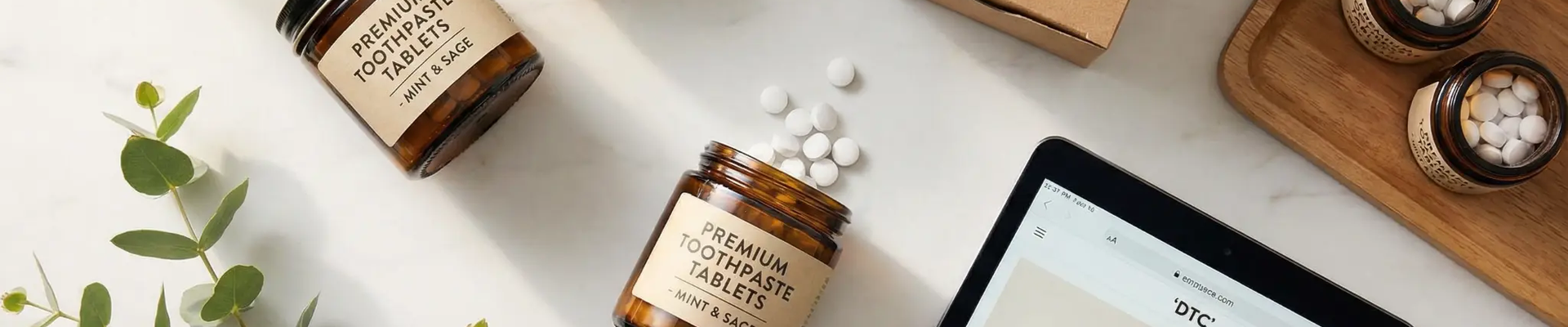
Glass jars are one of the most premium-looking packaging options for toothpaste tablets. They work well for brands that want the product to feel clean, reusable, and suitable for bathroom display.
For many consumers, a glass jar feels more permanent than a pouch or tube. This can help a toothpaste tablet brand communicate quality, sustainability, and a refillable lifestyle.
When Glass Jars Make Sense
Glass jar packaging is usually a good fit for:
Premium oral care brands
Beauty oral care products
Gift sets
Boutique retail
Bathroom-shelf lifestyle products
Refill system starter packs
Brands that want a strong first-purchase impression
The strongest positioning angle is:
Premium reusable packaging for daily toothpaste tablets.
Glass jars are especially useful when the first purchase is meant to feel more valuable. The customer can keep the jar and buy refill pouches later.
Buyer Considerations
Glass looks premium, but it brings practical cost and logistics issues. It is heavier than paper, aluminum, or pouch packaging. It can also break during shipping if the outer box and protection are not designed properly.
Before choosing glass jar packaging, brands should confirm:
Jar size and tablet count
Lid sealing performance
Inner seal or moisture protection method
Outer box or protective packaging
Shipping route and breakage risk
Label, printing, or screen-printing requirements
Whether refill pouches will be offered later
Target retail price and margin
Glass jars can be a strong choice for a premium brand, but they are not always the most cost-efficient choice for large-volume, low-price, or long-distance logistics projects.
Option 2: Paper Tube Packaging
Paper tubes are popular because they immediately communicate eco, plastic-reducing, and natural oral care positioning. For zero-waste and clean-label brands, this packaging format can look highly aligned with the brand story.
However, toothpaste tablets need moisture protection. A paper tube without the right inner liner, sealing structure, or cap design can create stability problems, especially in humid markets.
When Paper Tubes Make Sense
Paper tube packaging is usually a good fit for:
Natural oral care brands
Zero-waste stores
Plastic-free product lines
Eco travel oral care
Vegan and clean-label personal care brands
Retailers that want visible sustainable packaging
The strongest positioning angle is:
Eco-friendly toothpaste tablet packaging with a clean natural look.
Paper tubes can work especially well when the packaging itself is part of the reason customers buy.
Buyer Considerations
The biggest issue is not whether paper tubes look sustainable. The issue is whether they can protect the tablets well enough for your market and sales channel.
Before choosing paper tube packaging, brands should confirm:
Inner liner material
Moisture barrier level
Cap structure and sealing performance
Whether an inner bag is needed
Humidity in the target market
Shipping and warehouse conditions
Custom printing MOQ
Compatibility with label claims such as plastic-free, recyclable, or compostable
If your brand wants a paper tube, discuss moisture protection early with your toothpaste tablet manufacturer. The packaging claim should match the actual structure.
If your formula direction is not fixed yet, compare fluoride, nano hydroxyapatite, and fluoride-free toothpaste tablets before confirming the packaging structure.
Option 3: Aluminum Tin Packaging
Aluminum tins are lightweight, reusable, and compact. They are a practical choice for travel toothpaste tablets, gift sets, small-count packs, premium sample packs, and portable oral care products.
Compared with glass, aluminum is easier to ship. Compared with paper, aluminum usually feels more durable. Compared with refill pouches, it can create a stronger first-purchase experience.
When Aluminum Tins Make Sense
Aluminum tin packaging is usually a good fit for:
Travel toothpaste tablets
Small-count trial packs
Premium compact packs
Gift sets
Hotel or amenity upgrade products
Outdoor, gym, or on-the-go oral care
Brands that want reusable but lightweight packaging
The strongest positioning angle is:
Portable, reusable toothpaste tablet packaging for travel and daily carry.
Aluminum tins are especially useful when the product needs to feel compact, modern, and easy to carry.
Buyer Considerations
Aluminum tins are not risk-free. They can dent during shipping, and the sealing method must be checked carefully. Some tins look beautiful but do not provide enough moisture protection unless paired with the right inner seal, liner, or pouch.
Before choosing aluminum tin packaging, brands should confirm:
Tin size and tablet count
Lid tightness and sealing performance
Inner liner or seal option
Dent risk during shipping
Printing, embossing, or sticker label options
Whether the tin is for first purchase, travel pack, refillable use, or gift set
Target MOQ and custom color requirements
Aluminum tins can be a strong packaging choice when the brand wants a balance of premium feel, portability, and lower weight than glass.
Option 4: Refill Pouch Packaging
Refill pouches are increasingly important for toothpaste tablet brands. They are useful for repeat purchase, subscription, DTC, refill systems, and cost-efficient logistics.
A common strategy is to sell a reusable jar or tin as the starter pack, then sell refill pouches for repeat orders. This can reduce packaging weight, improve customer retention, and support a more sustainable refill story.
When Refill Pouches Make Sense
Refill pouch packaging is usually a good fit for:
DTC oral care brands
Subscription toothpaste tablet models
Refill systems
Eco brands with repeat-purchase strategy
Amazon or online brands that need lower shipping weight
Brands that want flexible pack counts
Retailers that sell refill packs separately
The strongest positioning angle is:
Lightweight refill packaging for repeat toothpaste tablet purchases.
Refill pouches are especially useful when the brand wants customers to buy again without paying for a new jar, tin, or tube each time.
Buyer Considerations
The main issue is barrier performance. A refill pouch must protect the tablets from moisture, flavor loss, and breakage. A pouch that looks eco-friendly but has weak sealing can damage the product experience.
Before choosing refill pouch packaging, brands should confirm:
Barrier material and structure
Resealable zipper or heat seal option
Pack count and pouch size
Moisture protection level
Whether the pouch is for refill only or first purchase
Shipping weight and carton packing
Custom printing MOQ
Compatibility with recyclable, compostable, or plastic-reducing claims
Refill pouches are often the best choice for repeat purchase, but the material structure should be selected carefully.
Packaging Recommendation by Brand Type
Brand Type
Recommended Packaging
Why It Works
Premium DTC oral care brand
Glass jar + refill pouch
Strong first impression, then lighter refill model
Zero-waste store brand
Paper tube or refill pouch
Matches eco positioning and low-waste retail expectations
Travel oral care brand
Aluminum tin
Portable, lightweight, reusable, and compact
Beauty oral care brand
Glass jar or aluminum tin
Better perceived value and shelf presentation
Subscription brand
Refill pouch
Lower shipping weight and better repeat-purchase economics
Hotel amenity supplier
Aluminum tin or small paper tube
Compact, presentable, and suitable for small-count packs
Amazon natural oral care brand
Refill pouch or paper tube
Good for logistics, sustainability messaging, and flexible pack sizes
Retail private label
Glass jar, paper tube, or pouch
Depends on shelf position, target price, and sustainability claims
Common Packaging Mistakes OEM Buyers Should Avoid
Mistake 1: Choosing packaging only by appearance
Good-looking packaging is not enough. Toothpaste tablets need moisture protection, sealing, and shipping stability.
Mistake 2: Using paper packaging without checking the inner structure
Paper tubes can look eco-friendly, but the inner liner and cap design determine whether the tablets stay stable.
Mistake 3: Choosing glass without calculating shipping cost
Glass jars can make a product feel premium, but they also increase shipping weight, carton protection needs, and breakage risk.
Mistake 4: Ignoring refill strategy
Many brands should not think only about the first purchase. A jar or tin can be paired with refill pouches to improve repeat purchase and reduce packaging waste.
Mistake 5: Asking for fully custom packaging before confirming MOQ
Custom molds, custom printing, special liners, embossing, and unique sizes can increase MOQ and lead time. Packaging design should match the launch budget.
Questions to Confirm Before Choosing Toothpaste Tablet Packaging
Before asking an OEM manufacturer for toothpaste tablet packaging options, prepare these details:
Which country or region will you sell in?
What is your target sales channel: retail, Amazon, DTC, subscription, hotel, zero-waste store, or pharmacy?
Do you want a premium first-purchase pack, refill pack, or both?
How many tablets should each pack contain?
What formula are you using: fluoride, nano hydroxyapatite, or fluoride-free?
Does the formula or flavor need extra moisture protection?
Do you need plastic-free, recyclable, compostable, reusable, or refillable claims?
What is your target unit cost?
What MOQ can your launch plan support?
Do you need custom printing, labeling, embossing, or a custom packaging structure?
When you send these details to Qiaoerna, our team can recommend packaging options that match your formula, brand positioning, target market, and private label production plan.
Need a packaging recommendation before sampling? Contact Qiaoerna with your target market, formula direction, pack count, and preferred packaging style.
FAQ: Toothpaste Tablet Packaging
What is the best packaging for toothpaste tablets?
There is no single best packaging for every toothpaste tablet brand. Glass jars are strong for premium positioning, paper tubes are strong for eco branding, aluminum tins are practical for travel and compact packs, and refill pouches are best for refill, subscription, and logistics-friendly models.
Do toothpaste tablets need moisture-proof packaging?
Yes. Toothpaste tablets need packaging that protects them from moisture, flavor loss, breakage, and storage instability. Moisture protection is especially important for paper tubes, refill pouches, and humid target markets.
Are paper tubes good for toothpaste tablets?
Paper tubes can be good for toothpaste tablets if the inner liner, cap structure, and sealing method are designed properly. Brands should not choose paper tubes only for appearance without checking moisture protection.
Are glass jars suitable for private label toothpaste tablets?
Glass jars are suitable for premium private label toothpaste tablets, gift sets, and refill starter packs. However, brands should consider shipping weight, breakage risk, protective packaging, and unit cost.
What packaging is best for refill toothpaste tablets?
Refill pouches are usually the best option for refill toothpaste tablets because they are lighter, flexible, and more suitable for repeat purchase. The pouch should still have strong barrier and sealing performance.
Can Qiaoerna customize toothpaste tablet packaging?
Yes. Qiaoerna supports custom toothpaste tablet packaging for private label oral care brands, including glass jars, paper tubes, aluminum tins, refill pouches, labels, boxes, and OEM production planning.
Work With Qiaoerna on Custom Toothpaste Tablet Packaging
Qiaoerna helps oral care brands develop private label toothpaste tablets with packaging options that match formula performance, brand positioning, cost targets, and production needs.
Whether your brand wants a premium glass jar, an eco paper tube, a portable aluminum tin, or a refill pouch system, our team can help you compare packaging structures, moisture protection, MOQ, design options, and bulk production feasibility.
Contact Qiaoerna to discuss custom toothpaste tablet packaging and private label production for your brand.
Related reading: Toothpaste Tablet Formula Selection Guide
![Lavender Sleep Toothpaste Tablets Nighttime Oral Care with Hydroxyapatite & Calming Botanicals]()
![Herbal Fresh Breath Toothpaste Tablets for Daily Oral Care | Plant-Based Solid Toothpaste]()
![Purple & White Color-Dual Toothpaste Tablets Color Balance & Enamel Defense]()
![Ginger & Herbal Enamel Care Toothpaste Tablets With Hydroxyapatite, Oak Bark & Clove Oil]()


