
- Home
-

New Standards in Sensitivity Relief: Analyzing The Synergistic OEM Effect of Potassium Nitrate And N-HAp
Views: 0 Author: Xiaoying Publish Time: 2026-07-09 Origin: Site


For decades, the oral care industry has treated dentin hypersensitivity as a binary problem: you either numb the nerve, or you block the hole. But what if you could do both simultaneously? In this post, you'll learn how the synergistic combination of Potassium Nitrate (KNO₃) and Nano-Hydroxyapatite (n-HAp) is creating a new gold standard in sensitivity relief, and how private label brands can leverage this dual-mechanism formulation to build premium, science-backed product lines.
The Evolution of Dentin Hypersensitivity Treatment
Dentin hypersensitivity (DH) affects up to 85% of the global population, characterized by a short, sharp pain arising from exposed dentin in response to thermal, evaporative, tactile, osmotic, or chemical stimuli [1]. Historically, the oral care market has relied on single-action active ingredients to address this widespread issue.
The traditional approach has been dominated by Potassium Nitrate (KNO₃), a depolarizing agent that numbs the nerve endings inside the tooth. While effective, it is a temporary fix that requires continuous, cumulative use to maintain efficacy. On the other side of the spectrum, newer formulations have introduced occluding agents like Strontium Chloride or Stannous Fluoride, which physically block the open dentinal tubules to prevent stimuli from reaching the nerve.
However, the modern consumer—often referred to as the "Skintellectual" of oral care—demands more than just temporary relief. They seek structural repair, biocompatibility, and immediate comfort. This shift in consumer expectation has paved the way for a revolutionary formulation strategy: the synergistic combination of Potassium Nitrate and Nano-Hydroxyapatite (n-HAp).
The Dual-Mechanism Synergy: How It Works
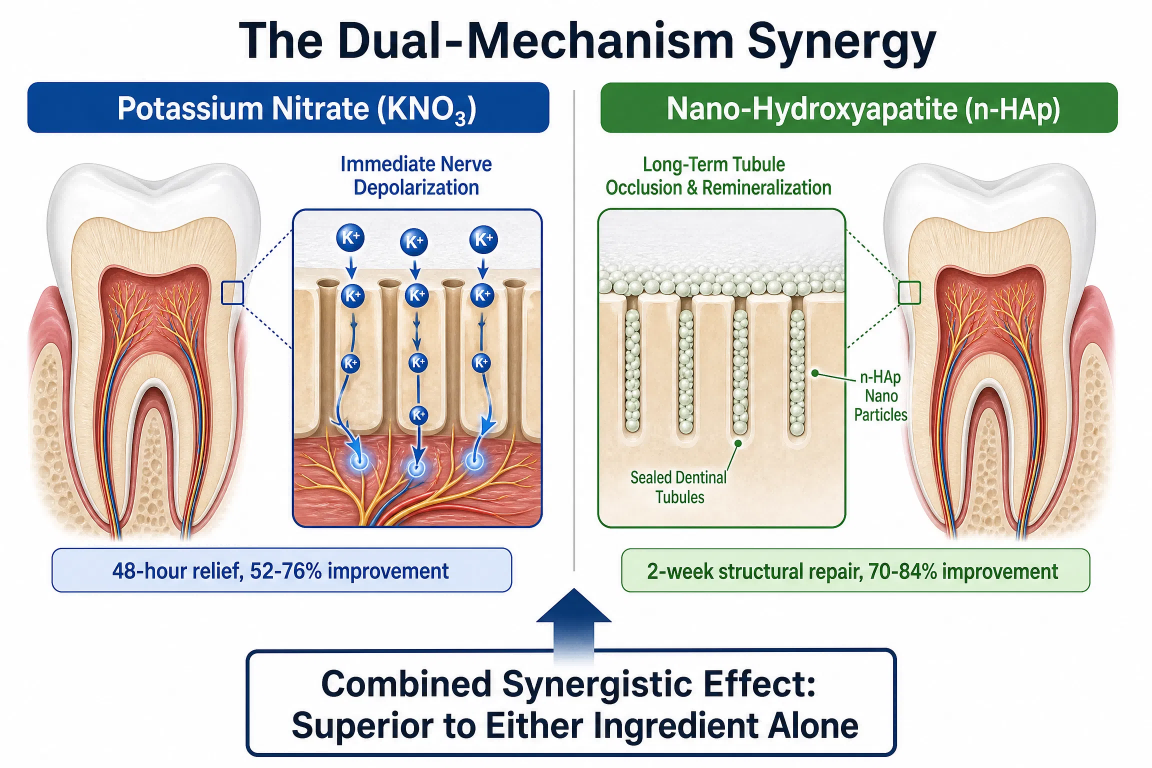
To understand why the combination of KNO₃ and n-HAp is so powerful, we must examine their individual mechanisms of action and how they complement each other in a single formulation.
Mechanism 1: Immediate Nerve Depolarization (KNO₃)
Potassium Nitrate operates on the direct innervation theory. When applied to the teeth, potassium ions (K⁺) diffuse through the dentinal tubules and reach the pulpal sensory nerve endings. Here, they increase the extracellular potassium concentration, which depolarizes the nerve cell membrane. This depolarization prevents the nerve from repolarizing, effectively blocking the transmission of pain signals to the brain [1].
The primary advantage of KNO₃ is its ability to provide relatively fast-acting relief from acute sensitivity. However, its limitation is that it does not address the root cause of the problem: the exposed, open dentinal tubules. If the consumer stops using the toothpaste, the potassium ions dissipate, and the sensitivity returns.
Mechanism 2: Long-Term Structural Repair (n-HAp)
Nano-Hydroxyapatite (n-HAp) is a biomimetic calcium phosphate compound that is chemically identical to the primary mineral component of human enamel and dentin. Unlike KNO₃, which acts on the nerves, n-HAp acts on the physical structure of the tooth.
When introduced into the oral cavity, n-HAp particles (typically ranging from 20 to 80 nanometers in size) penetrate and physically occlude the open dentinal tubules. This creates a protective "artificial smear layer" over the exposed dentin, blocking external stimuli from triggering the hydrodynamic fluid movement that causes pain [2]. Furthermore, n-HAp actively remineralizes the enamel surface, providing long-term structural repair and protection against acid erosion.
The Synergistic Effect: Immediate Comfort Meets Lasting Repair
When formulated together, KNO₃ and n-HAp create a powerful synergistic effect that addresses both the symptom and the cause of dentin hypersensitivity.
Immediate Relief: The Potassium Nitrate rapidly diffuses through the tubules to numb the nerve, providing the consumer with immediate comfort within the first 48 hours of use.
Long-Term Occlusion: Simultaneously, the Nano-Hydroxyapatite particles begin to fill and seal the open tubules, creating a physical barrier that prevents future stimuli from reaching the nerve.
Enhanced Efficacy: Clinical studies have demonstrated that a toothpaste containing both KNO₃ and n-HAp yields significantly better results than either ingredient alone. In a double-blind clinical trial, patients using this combination experienced a 52% to 76% improvement in sensitivity after just 48 hours, and a remarkable 70% to 84% improvement after two weeks of use [1].
This dual-action mechanism is the new benchmark for premium sensitivity relief products, offering brand owners a compelling, science-backed narrative for their marketing campaigns.
Consumer Demographics: Who is Buying Dual-Action Sensitivity Products?
Understanding the target audience is crucial for positioning a premium sensitivity toothpaste. The combination of KNO₃ and n-HAp appeals to three distinct consumer segments:
1. The Clinical Efficacy Seeker
This consumer suffers from severe, chronic dentin hypersensitivity and has likely tried multiple traditional sensitivity toothpastes with limited success. They are looking for a product backed by clinical data and dental professional recommendations. The dual-mechanism story—immediate nerve numbing combined with long-term tubule repair—resonates strongly with their need for a comprehensive solution.
2. The Post-Whitening Patient
Teeth whitening treatments, both in-office and at-home, frequently cause acute, temporary sensitivity due to the penetration of bleaching agents (like hydrogen peroxide) into the enamel. This demographic needs immediate relief to tolerate the whitening process, followed by structural remineralization to restore enamel integrity. A KNO₃ + n-HAp formulation is the ideal companion product for any premium teeth whitening kit.
3. The Clean Beauty Advocate
This consumer is highly educated about ingredients and actively seeks out biocompatible, non-toxic alternatives to traditional chemicals. They are drawn to Nano-Hydroxyapatite because it is a biomimetic mineral naturally found in the body, often viewing it as a safer, fluoride-free alternative for enamel repair. The addition of KNO₃ provides the functional efficacy they demand without compromising their clean beauty standards.
Formulating for Success: 3 Strategic OEM Blueprints
As an experienced OEM manufacturer, we understand that a successful product launch requires more than just mixing two ingredients. The formulation must be optimized for stability, sensory experience, and specific market positioning. Here are three strategic blueprints for incorporating KNO₃ and n-HAp into your private label oral care line:
Blueprint A: The "Clinical Repair" Toothpaste
Target Market: Pharmacies, dental clinics, and premium oral care brands.
Core Proposition: Maximum strength sensitivity relief and enamel restoration.
Active Ingredients: 5% Potassium Nitrate (the FDA monograph standard for OTC sensitivity claims in the US) + 10% Nano-Hydroxyapatite.
Supporting Ingredients: Antioxidants (like Phloretin or Ferulic Acid) to reduce gingival inflammation, and a mild, low-abrasion silica base to prevent further enamel wear.
Marketing Angle: "Dual-Action Clinical Relief: Numb the Pain Today, Repair the Enamel Tomorrow."
Blueprint B: The "Whitening Companion" Serum
Target Market: E-commerce brands selling teeth whitening kits and cosmetic dentistry practices.
Core Proposition: A post-whitening treatment to eliminate sensitivity and enhance gloss.
Active Ingredients: 3% Potassium Nitrate + 15% Nano-Hydroxyapatite.
Supporting Ingredients: Xylitol for caries prevention and a clear, viscous gel base for easy application via a syringe or pen.
Marketing Angle: "The Ultimate Post-Whitening Recovery Serum: Zero Sensitivity, Maximum Shine."
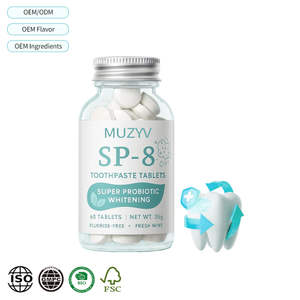
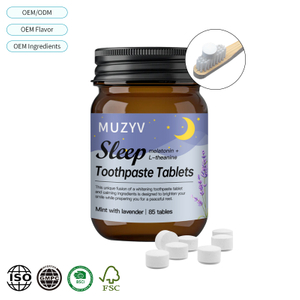
Blueprint C: The "Biomimetic Daily" Toothpaste Tablets
Target Market: Eco-conscious consumers, zero-waste shops, and travel brands.
Core Proposition: Sustainable, waterless sensitivity relief.
Active Ingredients: Potassium Nitrate + Nano-Hydroxyapatite in a compressed, anhydrous format.
Supporting Ingredients: Microcrystalline Cellulose (MCC) for gentle polishing and natural Peppermint Essential Oil for flavoring.
Marketing Angle: "Plastic-Free Sensitivity Relief: Advanced Biomimetic Science in a Sustainable Tablet."
Packaging and Marketing Strategies for Premium Positioning
When launching a product with advanced, synergistic ingredients, the packaging and marketing must reflect the premium nature of the formulation.
1. Educational Packaging: Do not hide the science. Use the packaging to educate the consumer about the dual mechanism. Consider using a split-diagram on the carton: one side showing KNO₃ calming the nerve, and the other side showing n-HAp particles filling the dentinal tubules. This visual representation instantly communicates the product's superior value proposition.
2. The "Biomimetic" Claim: Leverage the term "biomimetic" in your marketing copy. Consumers are increasingly drawn to products that mimic nature. Highlighting that n-HAp is the exact same mineral that makes up 97% of human enamel builds immense trust and justifies a premium price point.
3. Clinical Data Integration: Incorporate the clinical efficacy data directly into your marketing materials. Claims such as "Clinically proven to improve sensitivity by up to 84% in two weeks" (based on the Low et al. study [1]) provide powerful, objective validation for your product.
Frequently Asked Questions (FAQ)
Q1: Can I claim my KNO₃ + n-HAp toothpaste is an OTC drug in the United States? A: Yes, if formulated correctly. In the US, Potassium Nitrate at a 5% concentration is an FDA-approved active ingredient for treating dentin hypersensitivity under the OTC anticaries/desensitizing monograph. You can make specific sensitivity relief claims, provided your facility and product are properly registered with the FDA.
Q2: Does Nano-Hydroxyapatite interfere with the efficacy of Potassium Nitrate? A: No. Clinical studies indicate that they work synergistically without interference. The KNO₃ ions are small enough to diffuse through the tubules rapidly, while the larger n-HAp particles work to occlude the surface and upper portions of the tubules over time [2].
Q3: Is this combination suitable for fluoride-free brands? A: Absolutely. Nano-Hydroxyapatite is widely recognized as the premier alternative to fluoride for enamel remineralization. Combining it with KNO₃ creates a highly effective, fluoride-free sensitivity toothpaste that appeals strongly to the clean beauty and natural oral care markets.
Q4: How long does it take to manufacture a custom KNO₃ + n-HAp formulation? A: For a custom OEM formulation, the timeline typically ranges from 3 to 6 months. This includes R&D, stability testing (which is crucial when combining active minerals and salts), packaging design, and regulatory compliance checks.
Q5: Can this dual-mechanism be applied to mouthwashes? A: Yes. While toothpaste is the most common delivery system, we can formulate concentrated mouthwashes or oral serums utilizing this synergistic combination for targeted, liquid-based application.
Conclusion
The era of single-action sensitivity toothpaste is ending. Consumers are demanding comprehensive solutions that offer both immediate comfort and long-term structural repair. By leveraging the synergistic OEM effect of Potassium Nitrate and Nano-Hydroxyapatite, private label brands can establish a new standard in sensitivity relief.
Partnering with an advanced OEM manufacturer allows you to navigate the complexities of formulating these active ingredients, ensuring stability, efficacy, and global compliance. Whether you are launching a clinical-grade toothpaste, a post-whitening serum, or sustainable toothpaste tablets, the KNO₃ + n-HAp combination provides the scientific depth and premium positioning necessary to dominate the modern oral care market.