
- Home
-
![]()
Top Challenges In Oral Care Product Manufacturing And How Suppliers Solve Them
Views: 0 Author: Site Editor Publish Time: 2026-06-07 Origin: Site
![facebook sharing button]()
![twitter sharing button]()
![line sharing button]()
![wechat sharing button]()
![linkedin sharing button]()
![pinterest sharing button]()
![whatsapp sharing button]()
![kakao sharing button]()
![snapchat sharing button]()
![telegram sharing button]()
![sharethis sharing button]()
Oral care manufacturing operates at a high-stakes crossroads today. It blends the aesthetic appeal of cosmetics with the rigorous precision of pharmaceuticals. Modern consumers constantly raise their expectations. They demand formulations tailored to microbiome health. They expect vegan certifications and rapid, visible results. These rising standards have essentially eliminated the margin for error in production.
Formulating an effective Oral Care Product is no longer just about mixing basic abrasives and artificial flavorings. It requires highly precise chemical engineering. Active ingredients must thrive in a dynamic, harsh oral environment. They must deliver results without causing adverse reactions or violating shifting international regulations.
You need a critical framework to evaluate contract manufacturers effectively. This article equips brand owners and procurement managers with evidence-based insights. We will explore how top-tier suppliers resolve the industry's most severe bottlenecks. You will discover actionable strategies covering formulation stability, safety, and scalable production.
Key Takeaways
Formulation stability relies on advanced techniques like mucoadhesion to prevent active ingredients from being washed away by saliva.
Efficacy vs. Safety requires strict physical controls, such as limiting abrasive particle sizes to 4–12 µm to protect enamel during whitening processes.
Regulatory agility is non-negotiable; top suppliers proactively navigate frameworks like US MoCRA and EU guidelines to prevent border rejections.
Quality control must move beyond basic batch testing to include robust, four-step root cause analysis for any potential defects.
Navigating Formulation Complexity: Stability and Controlled Release
The oral cavity presents a uniquely harsh environment for product developers. Saliva constantly flows across teeth and gums. This natural mechanism rapidly dilutes active ingredients. Liquid and aerosolized formats face significant therapeutic hurdles. For example, a standard Mouthwash or a quick-dispensing Mouth Spray can be easily swallowed or washed away. This dramatically limits their effective therapeutic window.
The primary technical barrier involves achieving cross-batch stability. Manufacturers must ensure a controlled and extended release of critical ingredients. Fluorides need time to remineralize enamel. Desensitizers require prolonged contact to calm nerve endings. Without a proper delivery vehicle, these expensive actives simply flush down the drain.
Top-tier suppliers solve this through advanced polymer science. They utilize mucoadhesive polymers to extend efficacy. Specific carbomers act as binding agents. They temporarily attach active compounds to the oral mucosa. This creates a microscopic, protective film. It locks ingredients in place for hours rather than minutes.
Furthermore, elite manufacturers enforce rigorous accelerated stability testing. They simulate extreme conditions to monitor the formula. They verify pH levels remain stable. They ensure viscosity does not shift. They confirm active ingredient concentrations do not degrade over the intended shelf life. This scientific rigor guarantees consistent consumer experiences across every production run.
Best Practices for Stability:
Implement mucoadhesive agents to enhance ingredient retention.
Test viscosity at varied temperature extremes (e.g., 4°C to 45°C).
Monitor pH drift closely to prevent active compound deactivation.
Validate specific carbomer compatibility with essential flavoring oils.
Balancing Efficacy with Consumer Safety: The Whitening Dilemma
Consumer demand for aggressive Teeth Whitening solutions introduces significant manufacturing friction. Stronger formulations often conflict with biological limits. Enamel and gum tissue are highly delicate. Pushing the chemical boundaries risks heightened tooth sensitivity. It can also cause irreversible structural damage over time.
The core technical barrier lies in the removal mechanism. You must create a physical or chemical process that strips stains without scoring the enamel. Human enamel possesses a critical demineralization pH of 5.5. If a whitening gel drops below this threshold, it actively dissolves the tooth structure. Abrasiveness also requires meticulous calibration.
Suppliers address this through strict physical property management. They formulate with specialized abrasives like hydrated silica. They strictly control the particle size within the 4–12 µm range. This specific dimension provides enough friction to polish away surface stains. However, it remains fine enough to leave the enamel unscratched. They also ensure the Mohs hardness of the abrasive stays well below the hardness of human enamel.
Another crucial balance involves surfactant profiles. Surfactants create the foaming action consumers expect. Sodium Lauryl Sulfate (SLS) foams exceptionally well. However, it frequently causes mucosal irritation. Premium suppliers often balance SLS with Cocamidopropyl Betaine (CAPB). This hybrid approach maintains excellent ingredient dispersion. It delivers a satisfying foam while actively minimizing tissue irritation.
Adapting to Shifting Global Regulatory Standards
Regulatory compliance poses a massive hurdle for modern brands. The global landscape remains highly fragmented. It evolves rapidly without warning. In the United States, recent MoCRA updates drastically altered reporting rules. The European Union enforces incredibly stringent borders between cosmetics and medical devices. Meanwhile, regions like the UAE require entirely different labeling and ingredient documentation.
Modifying formulas for specific regional markets triggers heavy administrative burdens. Changing a single preservative might require updated Product Information Files (PIF). It mandates entirely new safety assessments. These delays can cripple launch timelines. They drain resources and stall market expansion.
Leading suppliers tackle this by maintaining robust in-house regulatory compliance teams. These experts do not just react to laws. They proactively design baseline formulations. They engineer these core formulas to meet the strictest overlapping global standards right from the start.
They also utilize pre-vetted "clean lists." If a market bans a specific ingredient, the supplier adapts immediately. They can instantly swap out targeted components. They accommodate localized mandates effortlessly. This includes zero microplastic policies or strict vegan certifications. This agility prevents costly border rejections and keeps supply chains moving.
Table 1: Key Regional Regulatory Variances in Oral Care
Region
Primary Regulatory Body
Key Compliance Focus
Common Formulation Impacts
United States
FDA (MoCRA)
Adverse event reporting, facility registration
Stricter documentation on flavor allergens and fluorides.
European Union
CPNP (Cosmetic Reg)
Safety Assessment, PIF documentation
Strict bans on specific preservatives and microplastics.
Middle East (UAE)
MoHAP / ESMA
Halal certification, label translation
Alcohol-free mandates for specific mouth rinses.
![Oral care product manufacturing and toothpaste tablets formulation]()
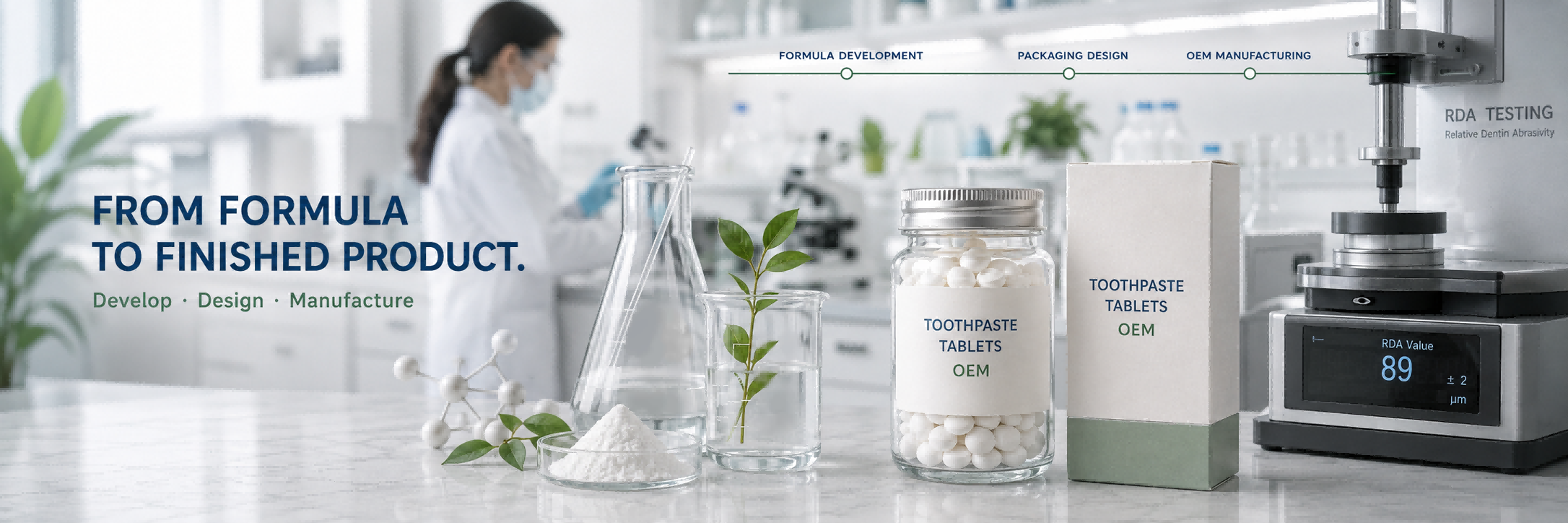
Engineering Modern Formats: From Pastes to Toothpaste Tablets
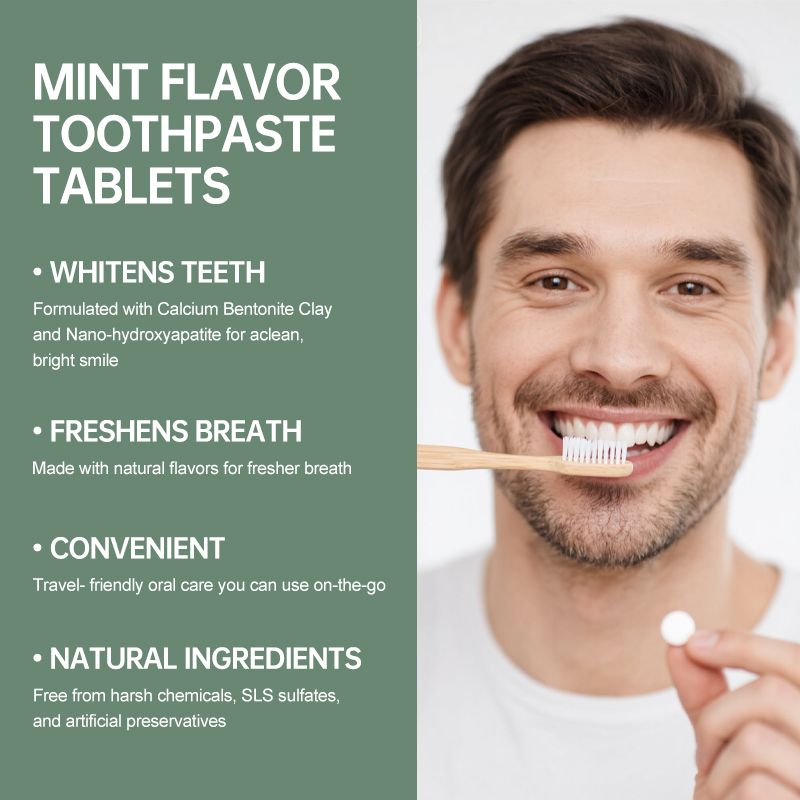
Sustainability trends push brands toward waterless, eco-friendly alternatives. The transition toward formats like Toothpaste Tablets introduces massive complexities. Traditional extrudable pastes rely on water and humectants for stability. Dry formats completely abandon these familiar chemical foundations.
Achieving uniform active ingredient dispersion poses a severe technical barrier. You must distribute fluorides and abrasives perfectly within a dry, compressed pill. Furthermore, the tablet must dissolve rapidly upon chewing. It must deliver a consumer-acceptable mouthfeel. Gritty or chalky textures instantly alienate buyers.
Suppliers solve this by investing heavily in specialized compression machinery. They establish humidity-controlled facility zones. Hygroscopic ingredients absorb moisture from the air quickly. If exposed to high humidity, they degrade prematurely before packaging. Controlling the factory atmosphere is entirely non-negotiable.
They also develop precision flavoring and binding agent matrices. The tableting process involves immense physical pressure. Weak binders cause the product to crumble during transport. However, overly strong binders prevent rapid dissolution. Advanced manufacturers calibrate these matrices perfectly. The flavors survive the mechanical stress. The structural integrity remains intact during shipping.
Chart 1: Manufacturing Variables Summary (Pastes vs. Tablets)
Variable
Traditional Paste
Compressed Tablet
Moisture Control
High water content requires strong preservatives.
Zero water; requires strict humidity-controlled zones.
Ingredient Dispersion
Achieved via liquid homogenization over hours.
Requires precise dry-blending technology.
Packaging Constraints
Tubes (plastic/aluminum) limit sustainability.
Glass jars or compostable pouches reduce plastic.
Sensory Delivery
Immediate flavor burst upon brushing.
Flavor release depends on rapid binder dissolution.
Supply Chain Resilience and Scalable Production
Geopolitical friction disrupts global markets constantly. Sudden raw material shortages force rapid formulation adjustments. These unpredictable events risk massive launch delays. They can also introduce unwanted quality shifts if not managed correctly.
Sourcing high-quality, cost-effective ingredients requires deep industry connections. The technical barrier involves maintaining interoperability. If a legacy formula loses its primary foaming agent, the replacement must integrate seamlessly. The new raw material cannot alter the pH, taste, or texture.
Exceptional suppliers counteract this fragility by maintaining secondary and tertiary supply chains. They pre-vet alternative vendors for all critical active ingredients. If one region halts exports, they pivot to another supplier instantly. This redundancy guarantees continuous production runs regardless of global instability.
They also implement fully digital workflows. Interoperable management software connects every department. These systems seamlessly track raw material origins. They assign automated production tasks directly to the factory floor. This digital oversight drastically reduces turnaround times. It transforms a chaotic supply chain into a predictable, scalable machine.
Stringent Quality Control and Defect Remediation
Even minor deviations during compounding create disastrous results. A slight miscalculation in mixing time can lead to product separation. Temperature fluctuations alter carefully crafted flavor profiles. Poor sanitation triggers immediate microbiological contamination. These errors destroy brand trust permanently.
Moving beyond basic pass/fail batch testing defines a premium manufacturer. The technical barrier involves establishing a continuous feedback loop. You must prevent recurring anomalies rather than just catching them at the end of the line.
Elite manufacturers implement rigorous Standard Operating Procedures (SOPs). They require multi-dimensional quality checks across chemical, physical, and aesthetic parameters. They do not just check pH. They evaluate the sensory experience, the color consistency, and the extrusion force.
When an anomaly does occur, they execute a standardized remediation protocol. This eliminates guesswork and fixes the core issue.
Root Cause Analysis: Teams investigate exactly why the deviation occurred. They trace back through digital logs and ingredient batches.
Impact Assessment: They determine the scope of the issue. They identify how many units or batches were affected by the error.
Corrective Measures: They immediately fix the faulty batch. They adjust the machinery or the mixing times to resolve the immediate symptom.
Preventive Measures: They rewrite the SOPs. They install new sensors or change workflows to guarantee this specific error never happens again.
Conclusion
A credible manufacturing partner drives your brand's long-term success. You should evaluate them on more than just their basic cost-per-unit. Assess their regulatory infrastructure. Scrutinize their technological capabilities, especially regarding complex challenges like mucoadhesion. Demand complete transparency in their quality control protocols.
Securing a resilient supply chain protects your market share. Moving forward, take concrete steps to verify these capabilities before committing to a partnership.
Actionable Next Steps:
Request detailed, accelerated stability reports for any proposed formulation.
Ask for precise particle size analyses specifically regarding whitening abrasives.
Demand documented proof of cross-border compliance and PIF readiness.
Review their defect remediation protocols before signing a Manufacturing Supply Agreement (MSA).
FAQ
Q: What is the difference between a private label and a custom-formulated oral care product?
A: Private label uses pre-tested, off-the-shelf formulas. This approach guarantees a faster time-to-market and lower initial costs. Custom formulation involves starting entirely from scratch. This process typically takes 6–9 months. Brands choose custom formulation to meet unique claims, secure exclusive patents, or intentionally exclude specific blacklisted ingredients from their product.
Q: How do manufacturers ensure the safety of whitening products?
A: Manufacturers ensure safety by meticulously controlling physical and chemical properties. They cap the Mohs hardness of abrasives well below the threshold of human enamel. They restrict abrasive particle sizes to 4–12 µm. They also meticulously control pH levels, keeping formulas above 5.5 to prevent dangerous enamel demineralization.
Q: What should I look for in a manufacturer's quality control documentation?
A: You should look for verifiable stability testing data across varied temperatures. Demand clear SOPs regarding raw ingredient substitution. Most importantly, seek documented root-cause analysis procedures. A reliable partner will show you exactly how they handle faulty batches using an established, multi-step remediation protocol.
![Bubble Gum Toothpaste Tablet Manufacturer]()
![Customized Mint Oil Pulling Mouthwash]()
![Peach Gummy Toothpaste Tablets]()
![Pregnancy Toothpaste Tablets]()
![Tea Tree Toothpaste Tablets OEM – Plastic-Free Herbal Oral Care Solution]()
![CoQ10 Probiotic Chewable Mouthwash Tablets]()
![Watermelon Toothpaste Tablets]()
![Hotel Toothpaste Tablets – 4-Tablet Pack]()