
- Home
-
![]()
Maintaining Oral Homeostasis With Prebiotic Inulin And FOS
Views: 0 Author: Site Editor Publish Time: 2026-02-03 Origin: Site
![facebook sharing button]()
![twitter sharing button]()
![line sharing button]()
![wechat sharing button]()
![linkedin sharing button]()
![pinterest sharing button]()
![whatsapp sharing button]()
![kakao sharing button]()
![snapchat sharing button]()
![telegram sharing button]()
![sharethis sharing button]()
For decades, dental care relied on a scorched-earth strategy. We brushed with harsh chemicals designed to sterilize the mouth, assuming that killing all bacteria was the only way to ensure hygiene. This approach is outdated. We now understand that oral health depends on cultivation, not eradication. The mouth is a complex ecosystem, and indiscriminate sterilization disrupts the delicate balance known as oral homeostasis.
Harsh ingredients like sodium lauryl sulfate (SLS), high-alcohol content, and broad-spectrum antimicrobials like Triclosan often cause more harm than good. They strip away the protective biofilm, drying out mucosal tissues and leaving the environment vulnerable. This disruption frequently leads to recurring issues such as chronic halitosis, sensitivity, and gum inflammation. When the natural defenses are down, pathogenic bacteria repopulate faster than beneficial ones.
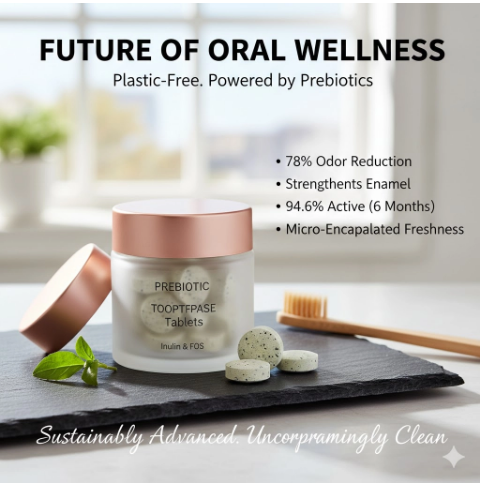
The solution lies in re-engineering the oral environment using prebiotic toothpaste tablets. This waterless, preservative-free delivery system provides a stable platform for Inulin and Fructooligosaccharides (FOS). These ingredients do not just clean teeth; they selectively feed beneficial commensal bacteria. By shifting the microbiome, we can suppress pathogens naturally. This approach transforms the daily routine from a chemical attack into a restorative therapy for long-term health.
Key Takeaways
Mechanism of Action: Inulin and FOS feed beneficial oral bacteria (Streptococci strains) which produce mild acids to suppress malodor-causing anaerobes.
Dual-Action Support: FOS provides rapid fermentation, while long-chain Inulin offers sustained prebiotic activity across the oral mucosa.
Delivery Matters: Toothpaste tablets prevent the degradation of prebiotics often seen in aqueous, preservative-heavy traditional pastes.
Systemic ROI: Supporting oral homeostasis positively impacts the gut-oral axis, potentially reducing risks associated with systemic inflammation.
The Biological Case for Prebiotic Toothpaste Tablets
Modern dentistry is moving away from the "kill all" mentality toward ecological management. To understand why this shift is necessary, we must look at how the oral microbiome functions when it is healthy versus when it is chemically assaulted.
Restoring the Native Ecology
Oral homeostasis creates a balanced state where the immune system and the oral biofilm coexist without inflammation. In this state, beneficial bacteria outcompete pathogens for resources. They occupy binding sites on the teeth and gums, preventing harmful invaders from taking hold. This natural defense system is remarkably effective when supported correctly.
Traditional antibacterial agents disrupt this harmony. They act like a forest fire, clearing the ground completely. While this temporarily lowers the total bacterial count, it leaves the "soil" of the mouth wide open. Opportunistic pathogens often grow back faster and more aggressively than beneficial strains in this vacuum. This cycle of sterilization and rapid pathogenic regrowth perpetuates inflammation and bad breath.
Why Tablets? The Stability Advantage
The efficacy of prebiotics depends heavily on how they are delivered. Mixing complex fibers like Inulin into a standard tube of toothpaste presents significant chemical challenges.
Preservative-Free Potency: Liquid pastes contain water. Water breeds life, so manufacturers must add potent preservatives like parabens or benzoates to prevent mold. Unfortunately, these preservatives do not distinguish between mold and the beneficial bacteria you want to nurture. They can neutralize the probiotic potential of your oral cavity before the prebiotic fibers even get a chance to work.
Concentration Integrity: Toothpaste tablets allow for a dry-format stability. In a waterless tablet, ingredients like Inulin and FOS remain distinct and inactive until the moment of use. They are activated only when you chew the tablet and mix it with saliva. This ensures that the prebiotics are bio-available at their peak potency exactly when they enter your mouth.
Feature Traditional Liquid Paste Prebiotic Toothpaste Tablets Water Content High (requires preservatives) Zero (preservative-free) Active Ingredient Stability Degrades over time in solution Remains stable until hydration Microbiome Impact Indiscriminate antimicrobial action Selective nourishment of commensals Inulin vs. FOS: The Synergy of Chain Lengths
Not all prebiotics function the same way. Effective oral care formulations combine different types of fibers to ensure comprehensive coverage across the mouth. The interaction between Inulin and FOS (Fructooligosaccharides) provides a synergistic effect based on their molecular structures.
Understanding the Structural Difference
The primary difference between these two compounds lies in their chain length, or Degree of Polymerization (DP). This length determines how quickly oral bacteria can ferment them.
FOS (Short-Chain): FOS molecules are small, with a DP ranging from 2 to 9. Their simple structure allows beneficial bacteria to break them down rapidly. FOS acts as high-octane fuel. It works quickly in the proximal areas of the oral cavity, jumpstarting enzymatic activity immediately upon brushing. It provides the initial burst of energy the microbiome needs to activate.
Inulin (Long-Chain): Inulin features a more complex structure with a DP of 10 or higher. Bacteria ferment these longer chains much more slowly. This property is crucial for oral care. As saliva circulates the dissolved tablet components, Inulin provides a "slow-release" effect. It ensures sustained prebiotic availability across the gums and mucosal tissues long after the initial brushing session creates the foam.
The "Ecological Replacement" Strategy
Combining these ingredients supports a strategy known as ecological replacement. Clinical evidence regarding malodor indicates that Inulin fermentation lowers the local pH slightly. This is a controlled shift, not a dangerous acidic drop.
This subtle pH shift creates an environment hostile to the anaerobic bacteria responsible for producing Volatile Sulfur Compounds (VSCs). These anaerobes thrive in neutral to alkaline conditions. By slightly acidifying the environment through beneficial fermentation, we suppress the bad breath bacteria naturally. Crucially, this pH level remains safe for tooth enamel, avoiding the erosion risks associated with acidic foods. When evaluating options, look for prebiotic toothpaste tablets that explicitly combine both ingredients to secure immediate and lasting microbiome support.
![Prebiotic Toothpaste Tablets for Oral Microbiome Balance]()
Evaluating Efficacy: Feature-to-Outcome Analysis
Consumers often struggle to translate ingredient lists into real-world results. For prebiotic oral care, the benefits are specific and measurable. Here is how specific biological features translate into health outcomes.
Malodor Control (Halitosis)
Feature: Selective fermentation of Inulin by commensal Streptococci.
Outcome: A significant reduction in VSC production without the use of drying alcohols or masking agents like strong mint.
Evidence: Clinical data suggests that organoleptic scores (professional measurements of bad breath) decrease significantly after prebiotic rinsing compared to placebo. The breath smells fresher because the root cause—the VSC-producing bacteria—has been starved out.
Gingival Health & Inflammation
Feature: Production of Short-Chain Fatty Acids (SCFAs), specifically butyrate, during the fermentation process.
Outcome: SCFAs are powerful signaling molecules. They are known to downregulate pro-inflammatory cytokines such as TNF-α and IL-6 in epithelial tissues. This biological action can help soothe inflamed gums and reduce bleeding associated with early-stage gingivitis.
Biofilm Management
Feature: Modification of biofilm composition through nutrient competition.
Outcome: Prebiotics promote a thinner, less pathogenic biofilm. A healthy plaque layer is easier to remove mechanically with a toothbrush. This contrasts with the thick, calcified pathogenic layers favored by harmful bacteria, which eventually harden into tartar.
The Oral-Gut Axis: TCO (Total Cost of Ownership) of Oral Health
Viewing oral health in isolation is a mistake. The mouth is the gateway to the digestive tract, and the state of your oral microbiome has profound implications for your systemic health.
Beyond the Smile: Systemic Impact
Pathogens that originate in the mouth do not always stay there. Bacteria like Porphyromonas gingivalis can enter the bloodstream through inflamed gums, a concept often called "Leaky Mouth." Once in circulation, these pathogens can affect gut integrity, contributing to "Leaky Gut" syndrome.
Switching to prebiotic toothpaste tablets is an investment in systemic immune support. Maintaining a healthy oral barrier prevents downstream inflammation. Research increasingly links oral pathogens to serious metabolic and cardiovascular issues. By stopping these invaders at the gate, you reduce the total inflammatory load your body must manage daily.
Minimizing Chemical Load
There is also the cost of cumulative chemical exposure. Generic toothpastes often contain microplastics, synthetic dyes, and endocrine disruptors like Triclosan. Because the mouth is highly absorbent, these chemicals enter your system rapidly. Prebiotic tablets offer a "compliance-ready" solution for those following clean-living or holistic health regimens. They eliminate the daily ingestion of synthetic antimicrobials, aligning your oral care routine with a non-toxic lifestyle.
Implementation and Usage Protocols
Transitioning from a chemical-heavy paste to a bioactive tablet requires a brief adjustment period. Understanding the protocols ensures you maximize the benefits.
The "Adaptation Phase"
When you first introduce prebiotics, the bacterial population in your mouth will shift. This rebalancing act is a sign the product is working.
What to Expect: You may notice temporary changes in mouthfeel. Some users report a sensation of increased salivation or very mild gas if they inadvertently swallow large amounts, though this is rare during normal brushing. These are indicators that fermentation is occurring.
Timeline: Tangible changes typically stabilize within 2 to 4 weeks of consistent use. Users often report a "cleaner feeling" upon waking up in the morning, indicating a reduction in overnight bacterial buildup.
Optimizing the Routine
To get the most out of Inulin and FOS, you must adjust how you finish your brushing routine.
Don't Rinse Immediately: This is the most critical rule. After brushing, spit out the foam, but do not rinse vigorously with water. Rinsing immediately washes away the prebiotic residue before it can finish feeding the biome.
Integration: If you use mouthwash, ensure it is non-alcoholic. Alternatively, simply use the foam generated by the tablet to swish around your mouth for an extra 30 seconds to maximize contact time with gum tissues.
Selection Criteria: How to Shortlist the Right Product
Not all tablets are created equal. As the market grows, so does the prevalence of products that claim prebiotic benefits without the formulation to back them up.
Ingredient Transparency
Watch out for "fairy dusting"—the practice of adding a microscopic amount of an active ingredient just to claim it on the label. Ensure that Inulin and FOS appear prominently in the ingredient deck, ideally near the top. The source matters as well; organic Chicory Root is the gold standard for high-quality, transparent Inulin sourcing.
The "Free-From" Checklist
The most crucial decision factor is avoiding formulation contradictions. Do not buy prebiotic toothpaste tablets that also contain broad-spectrum biocides. Ingredients like Triclosan, Chlorhexidine, or high concentrations of alcohol will negate the prebiotic benefit entirely. You cannot feed bacteria while simultaneously poisoning them.
Instead, look for xylitol compatibility. Xylitol works synergistically with prebiotics. While Inulin feeds the good bacteria, Xylitol inhibits S. mutans, the primary cause of cavities. This combination provides a dual-layer defense: starvation for the bad guys and a feast for the good guys.
Conclusion
Prebiotic Inulin and FOS represent the next generation of dental care. We are finally moving past the era of sterilization and learning to work with the body rather than against it. For consumers seeking sustainable, effective, and scientifically grounded oral care, prebiotic toothpaste tablets offer the optimal delivery system for maintaining long-term oral homeostasis.
The science supports a clear verdict: feeding your oral microbiome is more sustainable than trying to destroy it. To experience the difference, start with a 30-day trial of Inulin-based tablets. Monitor your breath quality upon waking and the sensitivity of your gums. The results of a balanced ecosystem speak for themselves.
FAQ
Q: Can prebiotics in toothpaste tablets actually survive digestion if swallowed?
A: Yes, they can survive, but their primary job happens before digestion. While safe to swallow, the dosage in a tablet is designed for oral fermentation. The Inulin and FOS interact with saliva and oral bacteria immediately upon chewing. If swallowed, they simply contribute a small amount of soluble fiber to your gut, but the main goal is rebalancing the mouth's ecology, not supplementing the gut directly.
Q: Will Inulin feed the bacteria that cause cavities?
A: No. Prebiotics are highly specific. Inulin and FOS are fermented by commensal strains and beneficial populations. The primary bacteria responsible for cavities, Streptococcus mutans, thrives on sucrose and simple sugars, not complex prebiotic fibers. By feeding the beneficial strains, you actually help them outcompete the cavity-causing bacteria for space and resources.
Q: How do toothpaste tablets compare to probiotic supplements?
A: There is a key distinction. Probiotics involve adding live bacteria, which is incredibly difficult to keep alive in shelf-stable pastes or tablets. Prebiotics (like Inulin tablets) feed the bacteria you already have. This approach is much more stable and reliable. Instead of introducing foreign bacteria that may not survive, you are strengthening your native, beneficial flora.
Q: Are these tablets safe for children?
A: Generally, yes. Prebiotic tablets rely on natural food-grade ingredients like chicory root fiber, making them safe for younger users. However, you should always check the fluoride content. Some tablets are fluoride-free, while others contain standard doses. Choose the version that aligns with your dentist's recommendations for your child's age and cavity risk profile.
![Blue Magic Mint Color-Changing Toothpaste Tabs (62 Tabs)]()
![Natural Sleep & Whitening Toothpaste Tablets – Overnight Teeth Stain Removal]()
![BioGuardian Probiotic Toothpaste Tablets with Prebiotic Formula]()
![SensiCare Nano-Repair Toothpaste Tablets for Sensitive Teeth]()
![Prebiotic Toothpaste Tablets for Oral Microbiome Balance]()
![test0124]()
![Anhydrous Prebiotic Toothpaste Tablets (Inulin & FOS Bio-Delivery System) 2026]()