
- Home
-
![]()
How Sleep Economy Is Reshaping Modern Oral Care?
Views: 0 Author: Site Editor Publish Time: 2026-01-27 Origin: Site
![facebook sharing button]()
![twitter sharing button]()
![line sharing button]()
![wechat sharing button]()
![linkedin sharing button]()
![pinterest sharing button]()
![whatsapp sharing button]()
![kakao sharing button]()
![snapchat sharing button]()
![telegram sharing button]()
![sharethis sharing button]()
For decades, the nightly brushing routine has focused on a singular goal: hygiene. We brush to remove plaque, prevent cavities, and achieve a fresh, minty feeling. However, a significant paradigm shift is occurring. Oral care is no longer just a cosmetic necessity; it is evolving into a systemic wellness pillar. This transition is driven by a deeper understanding of how the mouth influences the rest of the body, particularly regarding rest and recovery. The oral cavity is now recognized as the physiological "off-switch" for the day, transforming the bathroom sink into a critical checkpoint for health.
This evolution is occurring against the backdrop of the booming "Sleep Economy," a sector now valued at over $700 billion globally. As consumers scramble for blackout curtains, weighted blankets, and tracking rings, modern oral care is capturing a critical share of the market by targeting the "last five minutes before bed." The industry has identified a glaring disconnect: most traditional toothpastes deliver a "minty shock" that stimulates alertness just moments before we try to sleep. Furthermore, invasive medical solutions like CPAP machines struggle with low compliance.
The solution lies in bridging the gap between hygiene and physiology. By integrating sleep-inducing formulations into daily habits and utilizing non-invasive airway management, dentistry is redefining its role in systemic health. This article offers an evidence-based evaluation of functional oral products and clinical dental sleep medicine. We will explore how bio-functional ingredients and advanced oral appliances are reshaping the way the world sleeps.
Key Takeaways
Habit-Stacking Utility: How utilizing the existing brushing ritual improves adherence to sleep hygiene compared to pills or apps.
Bioavailability Factors: Why the oral mucosa offers a superior delivery route for sleep aids (like tart cherry or melatonin) over digestive absorption.
Clinical Alternatives: The measurable efficacy of Mandibular Advancement Devices (MADs) as viable, non-invasive alternatives to CPAP for mild-to-moderate apnea.
The TCO of Prevention: Analyzing the long-term Return on Investment (ROI) regarding systemic health costs (cardiovascular/metabolic) versus the premium cost of sleep-focused dental care.
The Biological Logic: Why Modern Oral Care is Owning "Sleep"
To understand why oral care brands are pivoting toward sleep wellness, one must look at the biological anatomy of the mouth. The oral cavity serves a dual purpose. It is the anatomical gateway to the gut, but more importantly, it is the primary structure of the upper airway. This unique position makes it the most logical intervention point for both biochemical sleep aids and physical airway management.
Mucosal Absorption Mechanics
When you swallow a sleep supplement, such as a melatonin capsule, it must travel through the digestive system. It faces the harsh environment of stomach acid and is processed by the liver—a phenomenon known as "first-pass metabolism." This process significantly reduces the potency of the supplement and delays its onset. You might take a pill at 10:00 PM but not feel the effects until 11:00 PM.
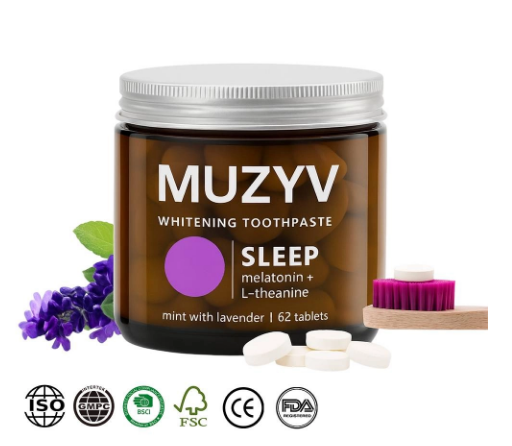
The mouth offers a superior route: sublingual (under the tongue) and buccal (cheek lining) delivery. The oral mucosa is rich in capillaries. Ingredients dissolved here can bypass the liver and enter the bloodstream almost immediately. This rapid absorption is a primary decision criterion for consumers and brands shifting toward functional oral products. By incorporating sleep aids directly into toothpaste tablets or dissolvable strips, the body receives the signal to wind down concurrently with the act of brushing.
The "Minty" Problem
Traditional toothpaste marketing has conditioned us to equate "clean" with an intense peppermint explosion. While this provides a sensation of freshness, it creates a sensory conflict biologically. Menthol, the active compound in peppermint, activates TRPM8 receptors. These are the body's cold-sensing receptors, which trigger a sensation of alertness and wakefulness—the exact opposite of what you need before bed.
Emerging sleep-centric formulations are dismantling this standard. Formulators are pivoting toward "wind-down" flavor profiles. Ingredients like chamomile, lavender, vanilla, and honey are being used to create physiological cues for relaxation. These flavors do not shock the system; instead, they signal the brain that the day is ending, supporting natural melatonin production rather than suppressing it.
Functional Formulations: Evaluating Sleep-Centric Toothpaste Tablets
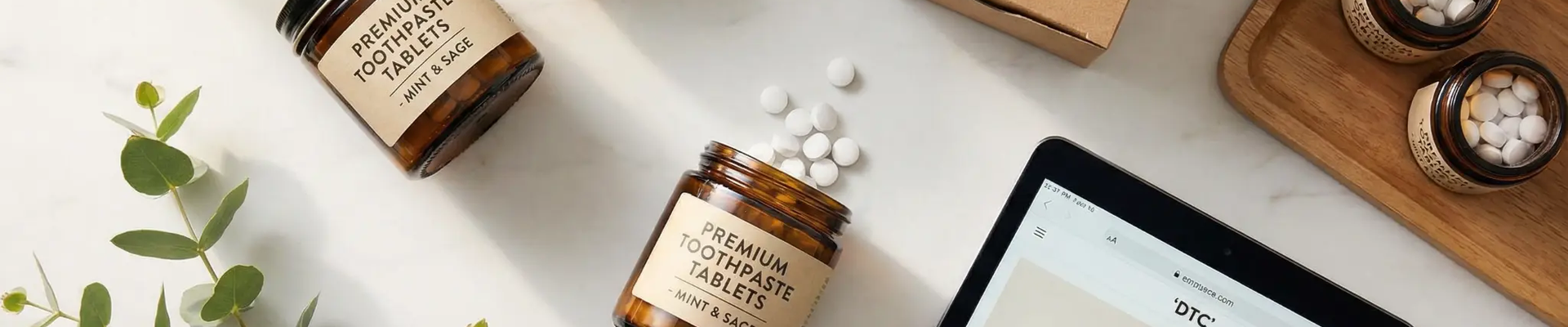
The most visible innovation in this sector is the rise of solid-state oral care. Specifically, toothpaste tablets infused with functional supplements are rapidly gaining market share. These are not merely eco-friendly alternatives to plastic tubes; they are precise delivery vehicles for bioactive compounds.
Ingredient Efficacy & Skepticism
The efficacy of these products relies heavily on their active ingredients. Consumers are becoming increasingly skeptical of "fairy dusting"—the practice of adding trace amounts of an ingredient just for marketing claims. Effective sleep formulations typically focus on two categories: hormonal support and sensitivity reduction.
Tart Cherry Extract & Melatonin: Many brands are opting for Tart Cherry extract as a source of natural phytomelatonin. Unlike synthetic hormones, which can cause grogginess or dependency, natural precursors tend to support the body's endogenous rhythms gently. The goal is to nudge the circadian rhythm, not force sedation.
Nano-Hydroxyapatite (nHAp): While not a sleep aid per se, nHAp is critical for sleep quality. Tooth sensitivity is a major cause of micro-arousals during the night. If a patient grinds their teeth or inhales cold air through the mouth, sensitivity pain can disrupt deep sleep cycles. By remineralizing enamel and blocking dentinal tubules, nHAp ensures that physical discomfort does not interrupt rest.
The "Ritual" Value Proposition
Beyond chemistry, the success of sleep-focused oral care is rooted in behavioral science. We call this "Habit-Stacking." This concept involves attaching a new, desired behavior to an established, automatic habit. Brushing teeth is arguably the most reliable habit in modern human life. Compliance data suggests that people are far more likely to finish a tube of toothpaste than a bottle of bedside supplements.
When the delivery of sleep support is embedded into the brushing ritual, adherence becomes automatic. There is no need to remember to take a pill or open a sleep-tracking app. The act of brushing becomes the trigger for sleep, creating a powerful psychological association between the bathroom sink and the pillow.
Clinical Dental Sleep Medicine: Beyond the Brush
While consumer products address sleep hygiene (chemical readiness), clinical dentistry addresses airway management (physical capability). It is vital to distinguish between "sleep hygiene" products available at a drugstore and "Dental Sleep Medicine," which is a clinical discipline treating disorders like Obstructive Sleep Apnea (OSA).
Device Evaluation: MADs vs. TRDs
For patients suffering from mild-to-moderate sleep apnea, the tongue and soft tissues collapse backward during sleep, blocking the airway. Dentists can prescribe custom-fabricated appliances to keep the airway open mechanically.
Mandibular Advancement Devices (MADs): These are the gold standard in oral appliance therapy. They function by snapping over the upper and lower teeth and holding the lower jaw (mandible) in a forward position. This advancement pulls the tongue forward, preventing it from collapsing against the back of the throat. They are adjustable, allowing the clinician to titrate the advancement to the millimeter.
Tongue Retaining Devices (TRDs): For patients with insufficient teeth to support a MAD or those with jaw joint issues, TRDs offer an alternative. These devices use suction to hold the tip of the tongue forward outside the mouth. While less comfortable for some, they effectively prevent the tongue from blocking the airway without moving the jaw.
The CPAP Comparison Matrix
The Continuous Positive Airway Pressure (CPAP) machine is often considered the most effective treatment for apnea, but it suffers from a major flaw: patients hate wearing it. The following table illustrates why oral appliances are often a superior real-world solution.
Feature CPAP Machine Oral Appliance (MAD) Theoretical Efficacy 100% (Eliminates nearly all events) 70-80% (Highly effective for mild/moderate) Patient Compliance Low (approx. 50% abandonment rate) High (85-90% nightly usage) Portability Low (Requires power, distilled water, carrying case) High (Fits in a pocket, no power needed) Social Factor Intrusive (Noise, mask covers face) Discreet (Inside the mouth) Important Distinction: Do not confuse Dental Sleep Medicine with "Sedation Dentistry." Sedation dentistry uses pharmacology to keep patients calm during procedures like root canals. Dental Sleep Medicine uses physics and anatomy to treat a chronic health condition nightly.

Implementation & Risks: Critical Considerations for Adoption
Embracing sleep-focused oral care requires navigating both consumer skepticism and clinical risks. The transition is not seamless, and awareness of potential hurdles is essential for safe adoption.
Adoption Hurdles
For consumers, the primary hurdle is the "medicalization" of the bathroom routine. Does a simple hygiene habit need to become a complex wellness protocol? Brands must balance functional benefits with ease of use. If a routine becomes too cumbersome, users will revert to standard fluoride paste.
For patients prescribed oral appliances, the adaptation period can be difficult. It is common to experience excessive salivation (drooling) or morning jaw tension during the first few weeks. The muscles of mastication must adapt to being held in a static forward position for eight hours. Without proper guidance, patients may abandon the therapy prematurely.
Side Effect Profiling
Oral appliances are powerful medical devices, and they carry risks if managed poorly.
TMJ Stress: Long-term use of Mandibular Advancement Devices places stress on the Temporomandibular Joint (TMJ). If the device is advanced too aggressively, it can cause inflammation or pain in the joint capsule.
Occlusal Changes: The most significant risk is a permanent change in the bite. Over years of use, the lower jaw may permanently shift forward, or the teeth may move, causing the bite to feel "off" in the morning. This underscores the necessity of custom-fitted devices made via digital scanning rather than "boil-and-bite" store-bought options, which lack precision and safety features.The Tech Gap
Efficacy validation remains a challenge. A CPAP machine records data on usage and airflow. A piece of plastic in the mouth does not. This "Tech Gap" is closing with the advent of Smart Dental tracking. New devices are embedding microsensors to track temperature (confirming the device is in the mouth) and movement. Coupling these devices with wearables (like Oura or Apple Watch) allows patients to correlate their device usage with improved sleep scores, validating the investment.
ROI and Value: Is the "Sleep Premium" Justified?
Transitioning to modern oral care solutions comes with a price tag. Functional toothpaste tablets can cost two to three times more than generic paste, and a custom oral appliance can range from $2,000 to $4,000. Is this premium justified?
Cost-Benefit Analysis
When viewing the cost through the lens of long-term health economics, the investment is negligible compared to the alternative. Untreated sleep apnea is a catalyst for expensive systemic diseases, including drug-resistant hypertension, Type 2 diabetes, and stroke. The lifetime cost of managing these conditions far exceeds the upfront cost of preventative dental sleep therapy. Furthermore, replacing a cabinet full of ineffective supplements with a single functional toothpaste can result in a neutral or positive monthly financial shift.
Quality of Life Metrics
The ROI is also measured in "soft" metrics. In clinical settings, successful sleep treatment results in anxiety reduction and improved cognitive function. This is often described as lifting a "brain fog." For professionals, the value of restorative sleep translates directly to performance. The "social confidence" of being able to travel without a bulky machine or share a bed without snoring is a tangible quality-of-life upgrade that many patients value above the financial cost.
Final Verdict on Value
For the general population seeking better rest, switching to non-stimulating, sleep-supportive oral care products is a low-risk, high-reward optimization. For snorers or those with mild apnea, investing in a clinical oral appliance is often the difference between compliance and abandonment, making it a superior value proposition to a CPAP machine that gathers dust in the closet.
Conclusion
Modern oral care has successfully evolved from a cosmetic necessity to a critical component of systemic longevity. The mouth is no longer seen merely as a set of teeth to be polished, but as the anatomical control center for the body’s airway and the mucosal gateway for wellness. The convergence of the $700 billion sleep economy with dentistry has produced a new standard of care that prioritizes rest alongside hygiene.
For consumers and patients, the decision framework is clear.
Step 1: Optimize the chemical routine. Replace stimulating, mint-heavy products with sleep-supportive toothpaste tablets that leverage mucosal absorption.
Step 2: Assess the physical structure. If quality sleep remains elusive, screen for airway obstruction or bruxism and consider clinical oral appliance therapy. The future of dentistry is not just about saving teeth; it is about securing the rest necessary for a long, healthy life.
FAQ
Q: Can toothpaste tablets actually help you sleep?
A: Yes, provided they contain the right functional ingredients. Unlike traditional toothpaste, sleep-centric tablets are often formulated with melatonin precursors like Tart Cherry extract or calming botanicals. The key mechanism is mucosal absorption—the ingredients enter the bloodstream rapidly through the tissues in the mouth, bypassing the slow digestive process. Additionally, these tablets remove stimulating peppermint flavors, replacing them with soothing profiles that help signal the body to wind down.
Q: What is the difference between Sleep Dentistry and Sedation Dentistry?
A: This is a common confusion. Sedation Dentistry involves using medication (like nitrous oxide or IV sedation) to manage patient anxiety and pain during a dental procedure. It is about comfort during treatment. Dental Sleep Medicine, however, is the practice of treating sleep-disordered breathing, such as snoring and obstructive sleep apnea, usually through the use of oral appliances. One treats the patient's fear; the other treats a chronic medical condition.
Q: Are Mandibular Advancement Devices (MADs) as effective as CPAP?
A: In terms of theoretical efficacy (removing 100% of apnea events), CPAP is superior. However, in terms of real-world effectiveness, MADs are often comparable for mild-to-moderate cases because of compliance. Many patients find CPAP masks intolerant and stop using them, rendering the therapy 0% effective. Because patients actually wear their MADs nightly due to higher comfort and portability, the net clinical benefit is often equal or better for that specific severity range.
Q: Do sleep-focused oral appliances damage the jaw (TMJ)?
A: There is a risk of temporary muscle tension or long-term bite changes if the device is not managed correctly. This is why "boil-and-bite" store-bought devices are risky—they are not calibrated to your specific anatomy. Custom devices fitted by a dentist are adjustable. The clinician monitors the jaw position to balance airway openness with joint health, minimizing the risk of TMJ pain or permanent occlusal shifts.
Q: Why is "modern oral care" becoming more expensive?
A: The price increase reflects a shift in materials and utility. Traditional oral care relied on cheap abrasives and detergents solely for cleaning. Modern oral care incorporates bioactive ingredients (like nano-hydroxyapatite and functional supplements) and medical-grade manufacturing. You are no longer paying just for soap for your teeth; you are paying for a wellness tool or a custom medical device that impacts your overall systemic health.
![Blue Magic Mint Color-Changing Toothpaste Tabs (62 Tabs)]()
![Nano Foam Capsule – Revolutionary Portable Oral Cleanse Capsule]()
![BioGuardian Probiotic Toothpaste Tablets with Prebiotic Formula]()
![Rapid Relief Sensitive Care Toothpaste Tablets]()
![SensiCare Nano-Repair Toothpaste Tablets for Sensitive Teeth]()
![Prebiotic Toothpaste Tablets for Oral Microbiome Balance]()