

- Home
-
![]()
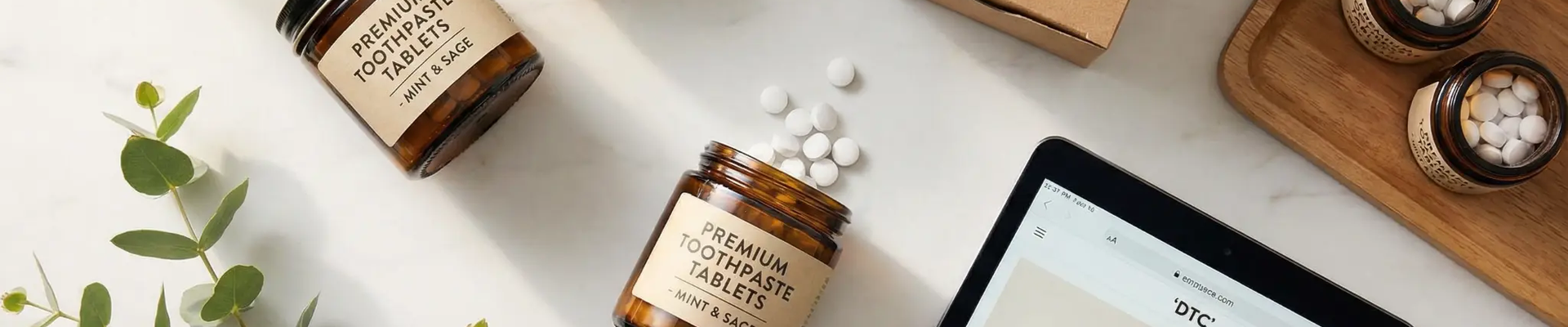
Beyond Sensitivity: The Biomimetic Dawn of Enamel Regeneration
Views: 0 Author: Site Editor Publish Time: 2026-02-13 Origin: Site
![facebook sharing button]()
![twitter sharing button]()
![line sharing button]()
![wechat sharing button]()
![linkedin sharing button]()
![pinterest sharing button]()
![whatsapp sharing button]()
![kakao sharing button]()
![snapchat sharing button]()
![telegram sharing button]()
![sharethis sharing button]()
How a Toothpaste Tablet Is Replacing Anesthesia with Architecture
For decades, dentistry has operated under a quiet, collective resignation: enamel does not grow back. Once lost to acid erosion, abrasion, or early decay, it was considered gone forever. The best we could do was slow the damage with fluoride, numb the pain with potassium nitrate, or temporarily plug exposed dentinal tubules with strontium chloride.
This is no longer true.
A toothpaste tablet that looks unassuming is, in fact, a precision biomimetic instrument. It marks a fundamental philosophical shift: from symptom management to structural reconstruction. This is not an iteration; it is a rupture.
I. The Old Paradigm: Anesthesia, Not Healing
To understand why a biomimetic repair tablet is revolutionary, we must first confront the limitations of conventional "anti-sensitivity" toothpaste.
Traditional desensitizing agents operate on two mechanisms, both of which are palliative, not curative:
Potassium salts (nitrate/citrate): They work by depolarizing nerve fibers inside the tooth pulp, essentially raising the pain threshold. The tooth remains demineralized, the tubules remain open—the brain simply stops receiving the alarm signal. You are not healed; you are sedated.
Strontium chloride / Stannous fluoride: These form a physical precipitate that occludes the opening of dentinal tubules. It is akin to stuffing paper into a leaking pipe. The barrier is temporary, non-integrated, and offers no restoration of lost enamel prism architecture.
Fluoride, while valuable in promoting remineralization, primarily strengthens existing mineral content rather than rebuilding lost structure. It cannot regenerate the complex hierarchical organization of enamel prisms.
This is the fundamental distinction: Protecting what remains is not the same as restoring what is missing.
II. The Biomimetic Turn: Learning from Nature's Blueprint
Biomimetics—from bios (life) and mimesis (imitation)—does not seek to invent new materials. It seeks to observe how nature builds, and replicate those principles.
Tooth enamel is 97% hydroxyapatite, a crystalline calcium phosphate. But its brilliance lies not in chemistry alone—it lies in architecture. Millions of elongated hydroxyapatite crystallites are bundled into prism-like structures, organized with microscopic precision. This is why enamel is both hard and fracture-resistant; it is not a random deposit, but an ordered masterpiece.
The central question of biomimetic dentistry has therefore been: How do we persuade ions to assemble themselves into enamel-like order, rather than chaotic precipitate?
A toothpaste tablet concentrated with precisely engineered biomimetic agents offers the most elegant answer yet. It delivers, in a single compressed dose, the building blocks that demineralized enamel has been waiting for.

III. Three Frontiers of Biomimetic Regeneration
1. Nano-Hydroxyapatite (n-HA): The Same Brick
The most intuitive approach: use the exact same material enamel is made of—at the nanoscale.
Conventional hydroxyapatite particles are too large to penetrate the micropores of early carious lesions (white spots). Nano-hydroxyapatite, with crystal sizes between 30–40 nanometers, behaves differently. It flows into demineralized interprismatic spaces, depositing directly onto residual crystal seeds. This is not a coating; it is fusion.
Within the compact matrix of a toothpaste tablet, nano-hydroxyapatite remains stable until activated by saliva. Once released, it penetrates deep into enamel micropores, reoccupying spaces left vacant by acid attack.
A 2019 comparative study demonstrated that n-HA dentifrice reduced artificial enamel lesion depth by 10.56% over seven days—significantly outperforming both fluoride and NovaMin. The calcium-to-phosphorus ratio on treated enamel surfaces shifted toward values characteristic of biological apatite, indicating true integration rather than mere surface adsorption.
What this means: We are not applying a foreign substance. We are replenishing the exact mineral that was lost, at a scale that allows structural reoccupation.
2. Bioactive Glass (NovaMin): The Ion Reservoir
If n-HA is the brick, bioactive glass is the brick factory.
NovaMin is a calcium sodium phosphosilicate compound. When exposed to saliva, it undergoes rapid ionic release, creating a localized supersaturation of calcium and phosphate ions. Over time, these ions crystallize into a hydroxycarbonate apatite layer—chemically and structurally similar to natural enamel.
A toothpaste tablet formulated with bioactive glass ensures that this ionic cascade begins precisely where it is needed. As the tablet dissolves between the bristles and teeth, it deposits millions of bioactive particles onto enamel surfaces, each one a microscopic reservoir of rebuilding potential.
Crucially, this layer is not static. It continues to release ions in acidic challenges, offering sustained protection against future demineralization. It is both a repair agent and an environmental modifier.
The same 2019 study confirmed NovaMin's efficacy: a 6.73% lesion depth reduction—clinically significant, though marginally lower than n-HA in this specific protocol. Yet its value lies in durability and its proactive ionic buffering capacity.
3. Self-Assembling Peptides (P11-4): The Molecular Architect
Here we arrive at the frontier.
Nano-hydroxyapatite provides material. Bioactive glass provides ions. But neither provides instruction. This is where peptide technology diverges radically.
P11-4 is a synthetic peptide designed to mimic enamel matrix proteins—nature's own scaffold for biomineralization. Under physiological conditions, these peptide monomers spontaneously assemble into three-dimensional fibrillar networks. This scaffold presents an array of negatively charged binding sites that attract calcium ions with high affinity, nucleating hydroxyapatite crystallization in a controlled, orderly fashion.
When incorporated into a toothpaste tablet format, P11-4 remains dormant until hydration. Upon brushing, it disperses across the tooth surface, seeking out demineralized zones. There, it self-assembles into a scaffold that guides ions into organized crystalline structures—not just filling the lesion, but rebuilding its architecture.
Recent synchrotron-based research (February 2026) published through Diamond Light Source has visualized this process at unprecedented resolution. Within caries-like lesions, P11-4 promoted deep, intralesional remineralization rather than superficial deposition. Critically, the regenerated crystallites exhibited organized orientation—comparable to healthy enamel prisms—rather than random agglomeration.
This is not repair. This is regeneration in the biological sense. The material is not merely deposited; it is structured.
IV. A Tale of Two Philosophies: Defense vs. Reconstruction
Approach Mechanism Philosophy Outcome Traditional Anti-sensitivity Nerve desensitization; tubule occlusion Palliative care Symptom suppression Fluoride Therapy Acid resistance; limited remineralization Damage control Slowed progression Biomimetic Regeneration Tablet Structural recrystallization; guided mineralization Biological restoration Reversal of mineral loss The distinction is not merely technical—it is conceptual. One paradigm asks: "How do I make this tooth stop hurting?" The other asks: "How do I make this tooth whole again?"
A toothpaste tablet does not ask patients to choose between convenience and efficacy. It delivers precision biomimetics in a form that is plastic-free, water-efficient, and travel-stable—yet the real story is not what it removes from oral care, but what it adds: the capacity to rebuild.

V. The Emerging Frontier: Keratin and Beyond
While our focus is hydroxyapatite, peptides, and bioactive glass, it is worth noting that the biomimetic field is expanding rapidly. In August 2025, King's College London published breakthrough research on keratin-based enamel regeneration.
Keratin, the structural protein in hair and wool, self-assembles into fibrillar scaffolds that mimic enamel's organic matrix. When applied to demineralized enamel, these scaffolds attract salivary calcium and phosphate, nucleating organized apatite crystallites. The regenerated layer exhibits mechanical resilience and optical transparency comparable to native enamel.
Dr. Sherif Elsharkawy, senior author of the study, framed it succinctly: "We are entering an era where biotechnology allows us to restore biological function using the body's own materials."
This is the throughline connecting keratin, peptides, and n-HA: the shift from synthetic replacement to biological guidance. And this shift is now being delivered not through laboratory-only procedures, but through a daily ritual as simple as biting into a tablet.
VI. Clinical Reality: Where We Stand
It is essential to calibrate expectation. True enamel regeneration—complete restoration of original prism architecture across large defects—remains aspirational. Current technologies excel at reversing early lesions (white spots, initial caries, hypersensitivity from mineral loss). Deep cavitations still require conventional restorations.
Yet even this boundary is being tested. Peer-reviewed editorials now openly discuss whether biomimetic scaffolds, combined with digital dentistry and personalized peptide formulations, might one day reduce the need for invasive drilling.
The goalposts have moved. We are no longer debating whether enamel can be repaired. We are debating how precisely, how durably, and how accessibly.
A toothpaste tablet, in this context, is not merely a delivery vehicle. It is the democratization of regenerative dentistry—bringing what was once confined to research laboratories into the morning and evening rhythm of everyday life.
VII. Reimagining What a Toothpaste Tablet Can Be
A biomimetic toothpaste tablet—whether powered by nano-hydroxyapatite, bioactive glass, or peptide-guided mineralization—represents a category redefinition.
It is no longer a cosmetic adjunct or a symptomatic patch. It is a regenerative intervention. It acknowledges that oral health is not merely the absence of pain, but the presence of structural integrity.
When a patient brushes with a formulation designed to actively reconstruct demineralized enamel, the act itself becomes something else. Not maintenance. Not prevention.
Restoration.
The tablet format is not incidental. It is a statement: that high-performance biomimetic science need not come with plastic waste, water-heavy manufacturing, or preservative-laden liquids. It is oral care stripped to its therapeutic essence—compressed, stable, precise.
And in that single shift, the entire narrative of enamel—brittle, finite, non-regenerating—begins to rewrite itself.

![BioGuardian Probiotic Toothpaste Tablets with Prebiotic Formula]()
![Nano Foam Capsule Pure Clean Water-Free Oral Care Foam]()
![Engineered OEM Toothpaste Tablets – Pharmaceutical-Grade Formula for Private Label Oral Care Brands]()
![Plastic-Free and Sustainable Enamel Repair Toothpaste Tablets]()
![Blue Magic Mint Color-Changing Toothpaste Tabs (62 Tabs)]()
![Nano Foam Capsule – Revolutionary Portable Oral Cleanse Capsule]()
![Natural Sleep & Whitening Toothpaste Tablets – Overnight Teeth Stain Removal]()


